When His Solar Export Got Cut Off, Here’s What He Did Instead
A Real-World Look at How an Energy Storage System Actually Works
A few months ago, one of our customers hit a wall that a lot of solar owners are starting to run into.
He’d had a 5kW on-grid solar system for a while — simple setup, no battery, just panels feeding straight into the grid. It worked fine, until it didn’t. His utility stopped allowing him to export excess energy back to the grid. All that extra power his panels were generating on sunny afternoons? Suddenly it had nowhere to go.
Then his family bought an EV. And installed a home charger. And now his energy needs had basically doubled overnight, at the exact moment his system had just gotten less flexible, not more.
So he had a decision to make. And the decision he landed on — expanding his setup with an energy storage system — is a pretty good crash course in how these systems actually work, and why more homeowners are reaching the same conclusion he did.
The Problem: Generating Power You’re Not Allowed to Use Later
Here’s the thing about solar panels — they don’t care what your schedule looks like. They produce the most power around midday, when the sun is highest. But most households actually use the least electricity around midday, because everyone’s at work or school. The real demand spike hits in the evening: dinner’s cooking, the AC is running, the EV is plugged in and charging overnight.
Without a battery, a solar system can only do one of two things with that midday surplus: export it to the grid, or waste it. When export gets restricted — which is happening more and more as utilities manage grid capacity — you’re left generating clean, free power that just evaporates.
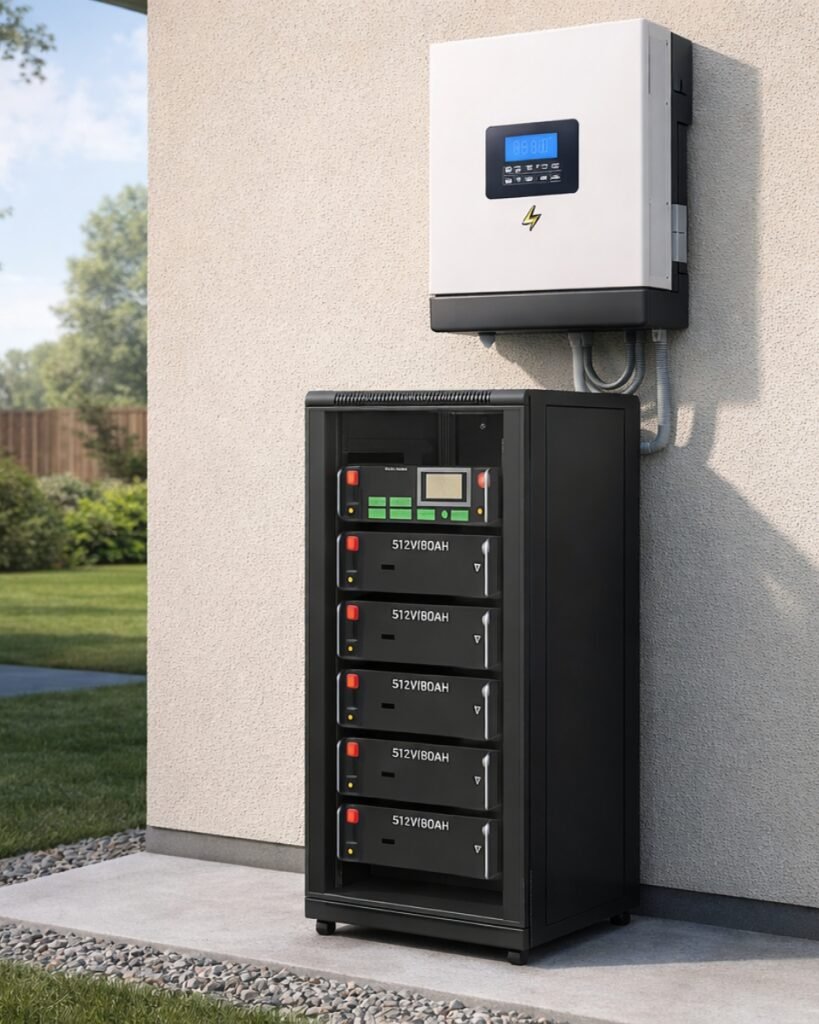
This is the exact problem an energy storage system (ESS) is built to solve.
What He Actually Did
Instead of just living with the limitation, he expanded the whole system:
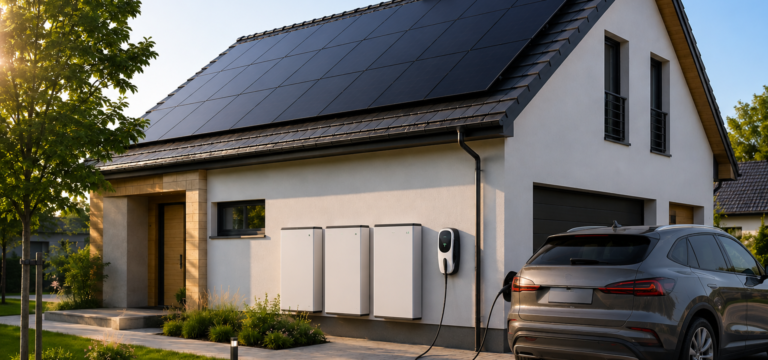
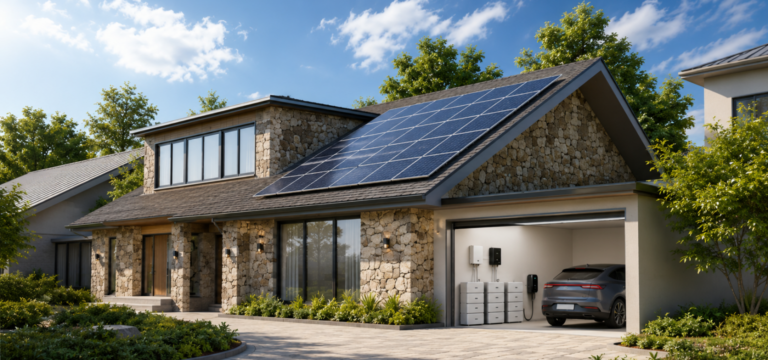
Doubled the solar array from 5kW to 10kW
Replaced the on-grid inverter with an 8kW hybrid inverter — the piece that lets a battery join the system at all
Added a 30kWh battery set to store what used to be wasted export capacity
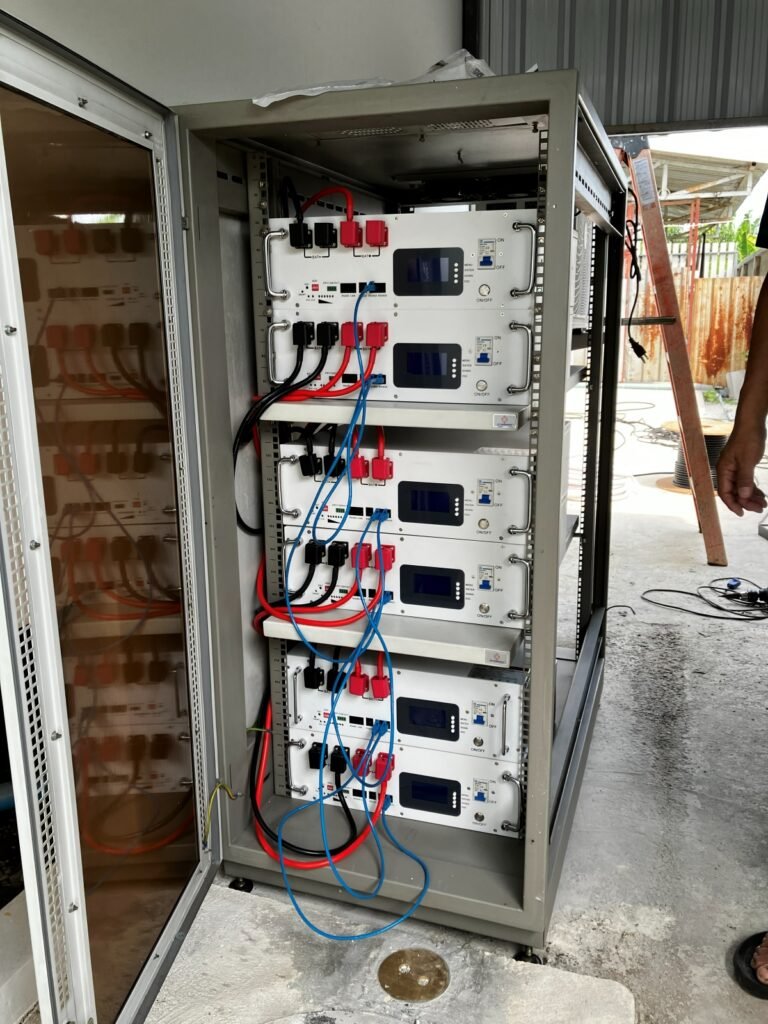
The upfront cost wasn’t small — I can vouch for this one directly, because I was the one who priced it out. All in, the expansion ran 180,000 to 200,000 Thai baht. That’s a real number, and it’s the part that makes people hesitate.
But here’s where it gets interesting. The expanded system should generate around 14,600 kWh a year. Based on his usage pattern, roughly 40% of that goes to the household and 60% goes to EV charging, and once you factor in about 85% round-trip efficiency (batteries lose a little energy every time they charge and discharge — nothing’s perfectly efficient), the savings break down like this:

Household savings, at the residential grid rate of ~4 Baht/unit: about 19,800 Baht a year
EV charging savings, measured against what he’d otherwise pay at a public DC fast charger — those run 6–10 Baht/unit in Thailand depending on time-of-use and location, so I used 8 Baht as a fair middle: about 59,600 Baht a year
Add it up and that’s roughly 79,400 Baht a year in savings. Against a 180-200K investment, that puts payback at around 2.3 to 2.5 years. That’s not a brochure number pulled from a sales sheet — it’s what I actually charged him, run against what he actually uses.
After that payback window, it’s essentially free power for the rest of the system’s lifespan. Plus something harder to put a number on: he’s no longer as exposed to outages, rate hikes, or export restrictions. That’s real energy independence, not just a lower bill.
So How Does This Actually Work Under the Hood?
His new setup is a good example of the three things every energy storage system needs to function:
The Battery Set (30kWh, in his case) This is where the midday solar surplus goes instead of being exported or wasted. Lithium-ion is the standard choice here — it’s what gives the system enough capacity to get a household through an evening of cooking, EV charging, and everything else, using power that was generated hours earlier for free.
The Power Conversion System (his 8kW hybrid inverter) Solar panels and batteries produce DC power. Homes and EV chargers run on AC. The hybrid inverter is what makes the whole thing talk to itself — converting DC to AC, and just as important, managing the flow between the panels, the battery, and the house so nothing gets sent to the grid unnecessarily.
The Energy Management System This is the quiet decision-maker running in the background — tracking the battery’s charge level, deciding when to draw from the battery versus the panels versus the grid, and timing things like EV charging to happen when there’s the most stored solar power available.
Charging and discharging aren’t separate events you have to manage — the system handles that automatically:
Midday: panels overproduce → excess charges the battery instead of exporting
Evening: demand spikes (cooking, AC, EV charging) → battery discharges to cover it
Overnight: if the battery’s still got charge left, it keeps covering the EV charger instead of pulling from the grid
Why This Story Isn’t Unique
His situation — export restrictions plus a new EV — is becoming one of the most common reasons households upgrade from solar-only to solar-plus-storage. A few scenarios where the same logic applies:
Peak-Shaving and Load Shifting — Using stored midday power to cover the evening demand spike, rather than pulling expensive peak-rate electricity from the grid.
Backup Power — In areas with frequent outages, a battery means the lights (and the fridge, and the router) stay on when the grid doesn’t.
Grid Stability — On a larger scale, batteries help utilities manage voltage fluctuations by absorbing or releasing power quickly — which is part of why some grids are getting stricter about how much unmanaged solar export they’ll accept in the first place.
The Real Takeaway
The upfront cost of a system like his is genuinely not small, and it’s fair to hesitate over 180-200K baht. But “expensive” and “bad investment” aren’t the same thing. When you’re generating power you already can’t export, and buying power every evening you could have made for free at noon, a battery isn’t really an upgrade — it’s closing a gap that was already costing you money.
Under 3 years to pay itself off, and free power after that. That’s the calculation that turned a frustrating export restriction into one of the better decisions this homeowner made all year.Thinking about whether a battery makes sense for your own setup? The math depends heavily on your usage pattern, panel size, and local electricity rates — happy to walk through the numbers for your specific situation.