
7 Mistakes to Avoid When Choosing a LiFePO4 Battery for ESS
A LiFePO4 battery for ESS projects rarely fail for one dramatic reason. It’s usually a handful of smaller oversights — a price decision made too early, a cell detail not checked, a compatibility assumption not tested, a warranty clause not read — that compound into a problem months or years after installation. The seven mistakes below cover the ground most worth checking before you commit to a battery, roughly in the order a buyer would actually evaluate them: from the buying mindset itself, through the cells, through packaging and system integration, to the warranty that’s supposed to back it all up.
1. Choosing a Battery Based Only on the Lowest Price
For a short-term, low-end purchase, the lowest price often wins, and that’s understandable. But an ESS battery isn’t a consumption product — it’s an investment meant to run for years, especially when it’s doing real work like energy arbitrage, peak shaving, or time-of-use optimization. Judged against that timeline, price alone is a poor way to choose.

Two batteries with identical specifications on paper, from two different manufacturers, can carry very different real costs — and not only because of the obvious differences in BMS choice, component sourcing, or production scale. Cell origin and condition vary in ways that are genuinely hard to verify from outside the factory: whether a cell is freshly produced, has sat in inventory for a year, or was pulled from a disassembled pack with no traceable production history. Storage and EV battery cells are precision electrochemical products, and that condition gap doesn’t show up on a spec sheet.
The cheapest battery today can easily become the most expensive one later, once failure, replacement, and project delays are factored in. Price is one input into the decision — it shouldn’t be the first filter that eliminates everything else on this list from consideration.
2. Judging Cell Brand Without Verifying Authenticity

A well-known cell brand is a reasonable starting point — top manufacturers earn their reputation through field-proven performance and independent testing, and that track record is worth something. But the brand name on a datasheet isn’t a guarantee by itself. Cells from reputable manufacturers are fine, as long as they’re genuinely authentic, properly stored, and tested before assembly — and all three of those conditions can fail quietly, even when the brand name is real.
Counterfeit or mislabeled cells circulate in the supply chain, particularly through intermediaries several steps removed from the original manufacturer. Cells can also be genuine but mishandled — stored too long, stored at poor temperature or humidity conditions, or not re-tested before being assembled into a pack months or years after they left the factory.
What to ask for: traceability back to the original cell manufacturer (batch codes, procurement documentation), and confirmation that cells were tested — not just assumed to be fine — immediately before pack assembly, regardless of how reputable the brand is.
3. Dismissing Any Battery That Isn’t Built From 100% Fresh, Top-Tier Cells

This is where it’s worth pushing back on an assumption a lot of buyers carry into the conversation: that a stationary ESS battery must use 100% fresh cells from a top-tier manufacturer to be worth considering.
It doesn’t, necessarily. Retired EV cells — LiFePO4 in particular, given the chemistry’s stability — can be genuinely well-suited to repurposing for energy storage applications. An EV cell retired at, say, 80% state of health (SoH) often has a great deal of useful life left for a stationary application, where the duty cycle and discharge demands are typically far less aggressive than they were in the vehicle.
That said, this is not a blanket endorsement of “any used cell is fine.” There’s a real difference between a properly graded second-life cell and one that should never have made it into a pack. The disqualifying signs are specific, and worth knowing regardless of whether a cell is first-life or second-life:
- Swelling — a physical sign of internal degradation or damage that shouldn’t be present in any cell going into a new pack
- Damaged terminals — a sign of poor handling, which raises questions about everything else that happened to that cell
- Inconsistent SoH across a group — cells in the same pack need reasonably matched health, not just similar age or source
- Poor cell-to-cell consistency — inconsistent voltage or capacity within a group undermines balancing and long-term performance, regardless of where the cells came from
The useful question isn’t “is this cell new or used?” It’s “has this cell actually been graded, tested, and verified against these specific failure signs?” A well-graded second-life cell can outperform a poorly verified “fresh” one.
4. Overlooking Dangerous Goods Packaging Requirements

Lithium batteries are classified as Dangerous Goods for transport, and that classification isn’t a formality — it exists because improperly packaged battery cells and packs carry real risk during shipping, loading, and unloading.
This is easy to overlook because it has nothing to do with the battery’s performance specs, and it’s rarely the first thing a buyer thinks to ask about. But improper packaging can mean damaged terminals before the battery even arrives, physical stress to cells in transit, or outright non-compliance that holds up a shipment at customs or triggers a safety incident during handling.
What to check: that the battery ships with appropriate UN-certified packaging for its classification, and that the supplier can provide the relevant transport documentation — including UN38.3 test reporting, which is the standard most carriers and customs authorities will expect to see before a lithium battery shipment moves.
5. Assuming Compatibility Instead of Testing It
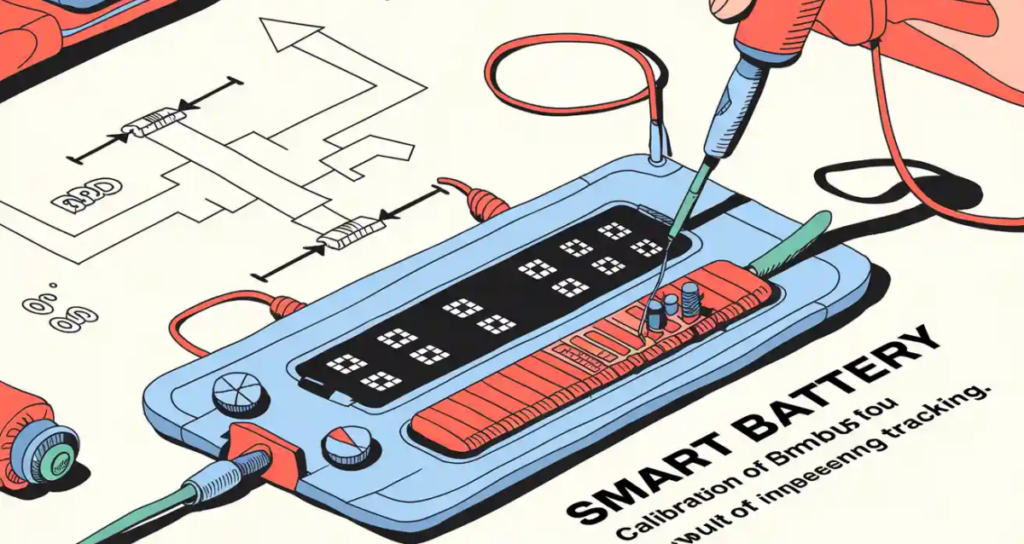
A battery doesn’t operate alone — from a system perspective, it’s genuinely subordinate to the hybrid inverter it’s paired with. The two typically come from different manufacturers, built around entirely different disciplines: the battery is an electrochemistry product, the inverter is a power electronics product. Compatibility between them isn’t automatic just because both sides claim support for the same communication protocol.
This is also where the BMS belongs in the conversation. The BMS is what actually carries out the communication with the inverter — voltage, current, temperature, and state-of-charge data all flow through it — so “is this battery compatible with my inverter” is really a question about the BMS, not the cells. It’s worth knowing specifically which BMS is inside the battery, not just the battery brand, since two batteries from the same manufacturer can use different BMS platforms depending on the product line.
CAN or RS485 being “known compatible” on paper is a reasonable starting signal, but protocol-level compatibility doesn’t guarantee that every parameter, firmware version, and edge-case behavior lines up in practice. In some cases — a new inverter model, a less common battery-inverter pairing, or a firmware update on either side — it’s worth running an actual compatibility test before committing to a full installation, rather than assuming the spec sheets are enough.
What to ask for: which BMS the battery actually uses, a documented list of inverter brands and models that BMS has been validated against — not just protocol support claimed in the abstract — and for an unusual or new pairing, a real compatibility test before the order is finalized.
6. Chasing the Highest Cycle Count Instead of Understanding What It Means

A bigger cycle-life number feels like a safer bet, and manufacturers know it — which is exactly why cycle counts tend to climb on marketing materials faster than they can realistically be independently verified. Confirming 8,000 or 10,000 cycles requires years of real operation or accelerated testing most buyers aren’t in a position to check themselves.
Chasing the highest number on the spec sheet isn’t the most practical strategy, because that number is difficult to verify and often doesn’t reflect how the battery will actually be used. A more useful approach is understanding two things instead: how a cycle is actually counted, and what operating conditions the rated number assumes — temperature, depth of discharge, C-rate, and how “end of life” is defined (70%, 80% capacity, or something else).
A battery rated for a very high cycle count under ideal lab conditions may deliver meaningfully fewer real cycles if it’s routinely operated outside those assumptions — and conversely, a more conservatively rated battery operated within its optimal conditions can outperform expectations. The practical question isn’t “which battery claims the most cycles,” but “which battery’s rated conditions actually match how this system will be used, and does the supplier state those conditions clearly.”
7. Not Getting Warranty Terms in Writing, System-Wide

A warranty is the fallback for everything above — if a cell issue, a compatibility problem, or premature degradation shows up after installation, the warranty is what determines who’s actually responsible for fixing it. That makes it worth more scrutiny than a single headline number.
Three things worth clarifying before purchase, each in writing:
- How long, and under what conditions. A warranty period means little without the preconditions attached to it — installation requirements, usage conditions, environmental limits, and anything that could void coverage.
- Battery, inverter, and solar warranties are separate. An ESS installation typically involves three different warranties — for the battery, the inverter, and the solar panels — often from three different manufacturers or distributors. A long battery warranty doesn’t help if the inverter it depends on carries a much shorter one, and a failure that crosses the boundary between battery and inverter can turn into a dispute over which warranty actually applies.
- Who actually stands behind it. A manufacturer’s warranty and a distributor’s warranty are not the same thing, and neither is a reseller’s warranty with no real manufacturing relationship behind it. Know specifically who you’re relying on if something goes wrong.
A vague claim of “full warranty coverage” isn’t a substitute for the actual document — always ask to see it before the order is finalized, not after.
Final Thought
None of these seven mistakes are about finding a flawless battery — there isn’t one. They’re about knowing which questions actually matter, so the gaps that do exist are ones you chose to accept rather than ones you didn’t know were there.