
10 Questions to Ask a Battery Manufacturer Before Buying LiFePO4 Batteries
If you’re buying battery cells directly, in large volume, straight from an established cell manufacturer, you honestly don’t need a long checklist. Major cell brands stand behind their name — their products are field-proven and independently tested, and the risk profile is low.
But most buyers aren’t in that position. Most are buying finished battery packs or systems from small or medium-sized LiFePO4 battery manufacturers — and that’s a very different risk category. These suppliers sit a step removed from the cell factory, and the gap between “what a supplier says” and “what a supplier actually does” can be wide. The questions below are built for that reality: they’re the questions that separate a transparent, capable supplier from one that’s hoping you won’t ask.
1. What Type and Grade of LiFePO4 Cells Do You Use?
This is the most ambiguous part of the entire supply chain — and it trips up even industry insiders.

Small and medium-sized pack, battery system, or ESS manufacturers typically work with two or three cell suppliers, sometimes more when supply is tight. That’s normal. What’s less obvious is why: large, established cell manufacturers generally don’t sell directly to small and medium-sized makers. The order volumes are too small, and taking on too many direct clients slows down order processing for everyone. So buying through large cell wholesalers is the norm for most small and medium-sized manufacturers — not a red flag by itself.
The real issue is that wholesalers rarely deal in fresh, first-life cells alone. Grade A, Grade B, recycled, and retired cells all move through the same channels, often without much distinction on paper. Being able to trace cell origin and actual condition — not just the datasheet — is critical.
What to ask for: the cell brand, model number, and grade in writing; whether the cells are first-life or second-life; and if possible, a batch or traceability code you can verify independently.
2. Where Are Your Batteries Manufactured, and How Is Production Controlled?
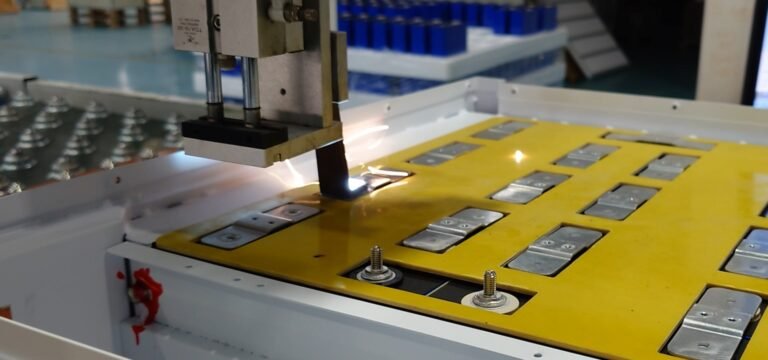
Ask whether production happens in-house or through a third party, and what quality control looks like at each stage. A supplier with real control over their process should be able to walk you through incoming material inspection, cell consistency checks, module-level electrical testing, pack-level EL testing, aging tests, and a full cycle of testing before any unit ships.

Example of a transparent answer: “All of our battery products are manufactured in-house. As the factory, we have full control over the production process — from incoming material inspection and cell consistency checks, to module electrical testing, pack EL testing, aging testing, and a full test cycle before shipment.”
If a supplier can’t describe their QC process in this level of detail, that’s worth noting.
3. What Cycle Life and Capacity Retention Can I Expect?
Cycle life numbers on a datasheet only mean something in context. Ask what depth of discharge (DoD) and test conditions the rated cycle life is based on — a “6,000 cycles” claim at 100% DoD and 25°C is a very different product from the same number at 80% DoD and elevated temperature. Also ask what capacity retention the supplier guarantees at end of warranty (for example, 70% or 80% remaining capacity after a stated number of years or cycles), and whether that figure is backed by their own lab data or third-party test reports.
What to ask for: the DoD and temperature conditions behind the rated cycle life, and any third-party or independent test reports supporting the capacity retention claim — not just the number on the spec sheet.
4. What BMS Is Used, and What Protection Functions Does It Provide?
The BMS is the difference between a pack that just holds charge and one that actually protects itself and communicates properly with your inverter. Ask which BMS brand and platform is used, what protection functions it covers (over-voltage, over-current, short-circuit, temperature, cell balancing), and — importantly — whether it’s compatible with the inverter or PCS you plan to pair it with.

Example of a transparent answer: “For about 90% of our standard residential battery products, we use JBD or JKS BMS. Both are mature platforms with rich functionality — mobile app monitoring, active balancing, touchscreen display — and are widely used in the residential segment, with compatibility across most major hybrid inverters on the market. For high-voltage battery products, we typically use Gaote BMS for its stable performance and strong compatibility with large three-phase hybrid inverters and PCS.”
5. How Do You Test Each Battery Before Shipment?
Every battery should go through electrical performance testing, aging testing, and — critically for ESS applications — a communication test with the hybrid inverter it’s meant to pair with. That last step is easy to skip and is often where field issues actually originate, not in the cell or pack hardware itself.

Example of a transparent answer: “Each unit goes through electrical performance testing, aging testing, and system communication testing with hybrid inverters before it ships.”
6. What Certifications and Compliance Documents Are Available?
Certifications should match the market you’re actually selling into — a certificate for the wrong region is close to worthless. Ask for the specific certification documents, not just a logo on a datasheet.
Example of a transparent answer: “Since our main market is Southeast Asia, our products carry CE certification and comply with IEC 62619.”
If you’re selling into other regions, ask directly whether UL, UN38.3 (required for transport), or other regionally-relevant certifications are available — don’t assume CE alone covers every market.
7. What Is the Warranty and After-Sales Policy?
Get the warranty term in writing, along with the specific preconditions that could void it — installation requirements, usage conditions, environmental limits, and so on. A vague “industry-standard warranty” claim isn’t enough; ask to see the actual document.

Example of a transparent answer: “For all standard battery products — unless otherwise specified or custom-made — we offer a three-year warranty, with preconditions defined in the product’s user manual.”
What to ask for: what happens if a battery fails within the warranty period — repair, replacement, or credit — and how long that process typically takes.
8. What Are Your MOQ, Lead Time, and Production Capacity?
This matters for planning as much as for vetting the supplier’s scale. A supplier’s stated capacity should roughly line up with the order volumes and lead times they’re quoting you — if the numbers don’t add up, ask why.
Example of a transparent answer: “Our current monthly production capacity is 10MWh. One advantage of being a small-to-medium-sized manufacturer is that we can accommodate low-MOQ orders.”
9. Can You Support OEM/ODM and Long-Term Distributor Cooperation?
If you’re planning to build a brand around this product — or need custom specifications, labeling, or packaging — ask directly about OEM/ODM capability and what long-term distributor support looks like (pricing tiers, marketing materials, technical support for your team).
Example of a transparent answer: “Yes — our years of experience in the battery industry allow us to offer custom-made service, including white-label and ODM production.”
10. Can You Provide References or Case Studies from Existing Clients?
A supplier confident in their product should be willing to connect you with existing customers, or at least share case studies or project references — ideally in a market or application similar to yours. This is one of the fastest ways to validate everything else on this list: a real customer can tell you whether the BMS actually performed as described, whether the warranty process was smooth, and whether the supplier delivered on time.
What to ask for: two or three references you can actually contact, or documented case studies with enough detail (application, scale, time in service) to be meaningful.
Final Thought
None of these questions are meant to be adversarial — a supplier that answers them clearly and specifically, the way the examples above do, is signaling exactly the kind of transparency you want in a long-term partner. The suppliers worth worrying about aren’t the ones with imperfect answers; they’re the ones who can’t or won’t answer at all.