Should You Buy LiFePO4 or AGM in 2026? Full Comparison
The question everyone still Googles in 2026: “Should I buy LiFePO4 or AGM?”
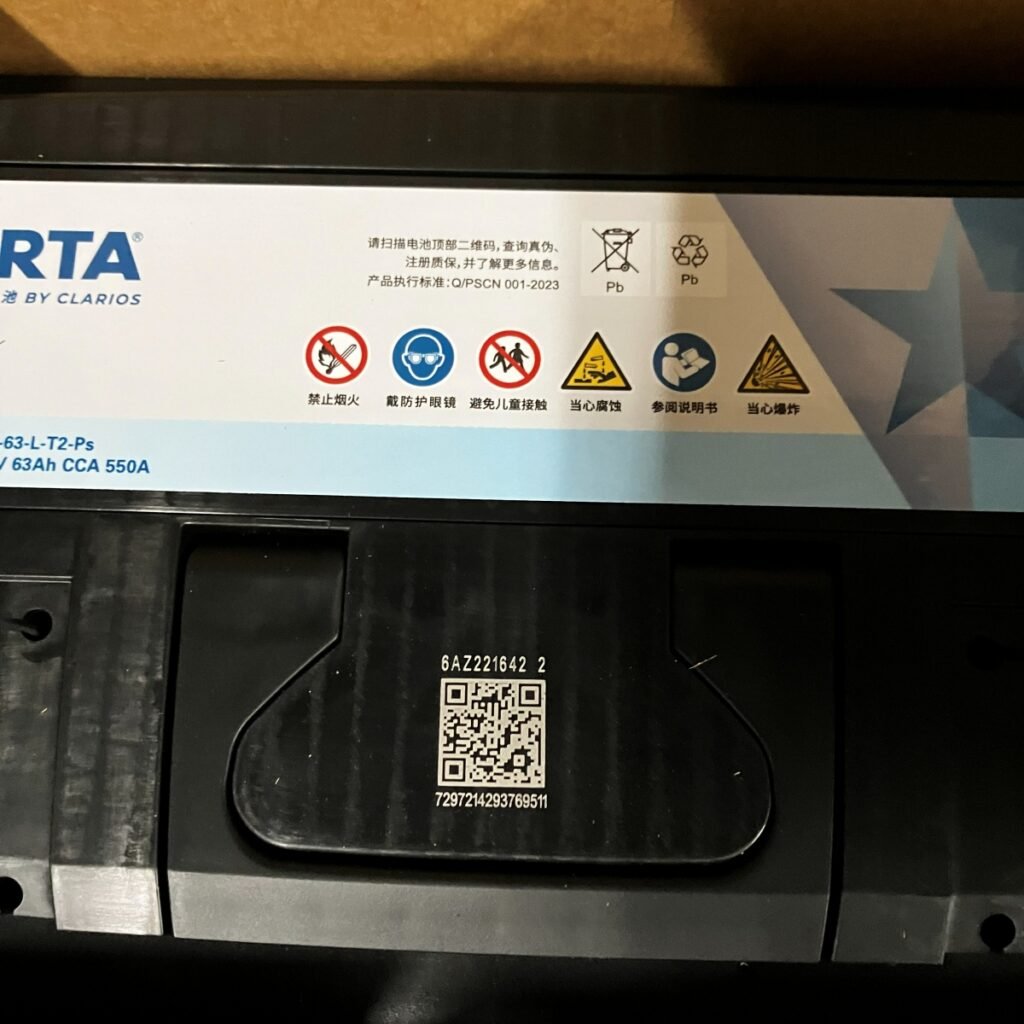
I recently had my EV’s auxiliary battery — often called an automotive battery or car battery — replaced, and to my surprise, it turned out to be a 12V AGM battery. AGM auxiliary batteries have been standard in ICE cars for years, and even early Tesla EV models used them too.
Ten years ago, AGM batteries were at the center of our lives — car starters, UPS systems, RVs, boats, telecom backup, and large stationary storage. Then lithium-ion batteries arrived and took over first in electronics, then electric vehicles, solar storage, robotics, and off-grid living, in record time.
Today, LiFePO4 and NCM batteries dominate roughly 90% of modern applications — but AGM is still the smarter and cheaper choice in specific situations. Here’s your complete, no-fluff 2026 guide.
1. What Is a LiFePO4 (LFP) Battery?
A LiFePO₄ battery uses:
- Lithium iron phosphate (LiFePO₄) as the cathode
- Graphite (carbon) as the anode
Cell voltage: 3.2 V nominal · Full charge: 3.6–3.65 V
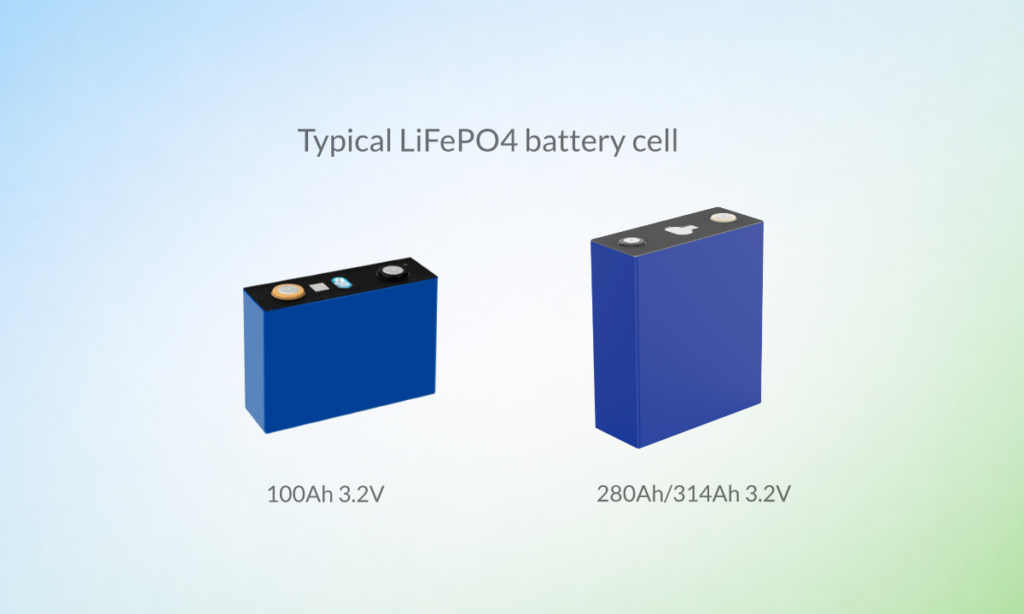
Thanks to extreme chemical stability, virtually zero thermal-runaway risk, and 3,000–7,000+ real-world cycles, LFP is now the go-to choice for electric vehicles, solar banks, robotics, industrial machines, and any deep-cycle application.
2. What Is an AGM Battery?
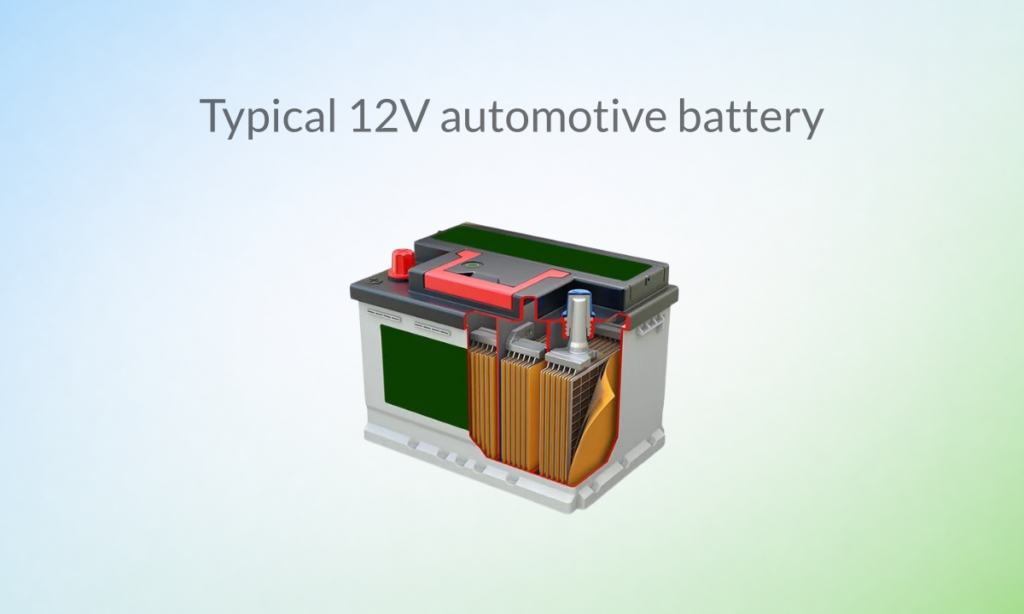
AGM (Absorbent Glass Mat) is a sealed lead-acid design that immobilizes the electrolyte in a fiberglass mat, making it spill-proof, vibration-resistant, and maintenance-free compared to flooded lead-acid.
When AGM Is Still the Better Choice in 2026
AGM is still the better choice when:
- The battery spends 99% of its life on standby/float (UPS, alarms, emergency lighting)
- You need reliable performance down to –40°C / –40°F
- You want zero fire/explosion risk and the simplest possible system
- Deep cycling is rare (weekend RV or boat use)
Main drawbacks vs LFP:
- ~15% charging losses
- Limited to 50–70% DoD for decent lifespan
- Higher self-discharge (roughly 3–5% per month vs 1–3% for LFP)
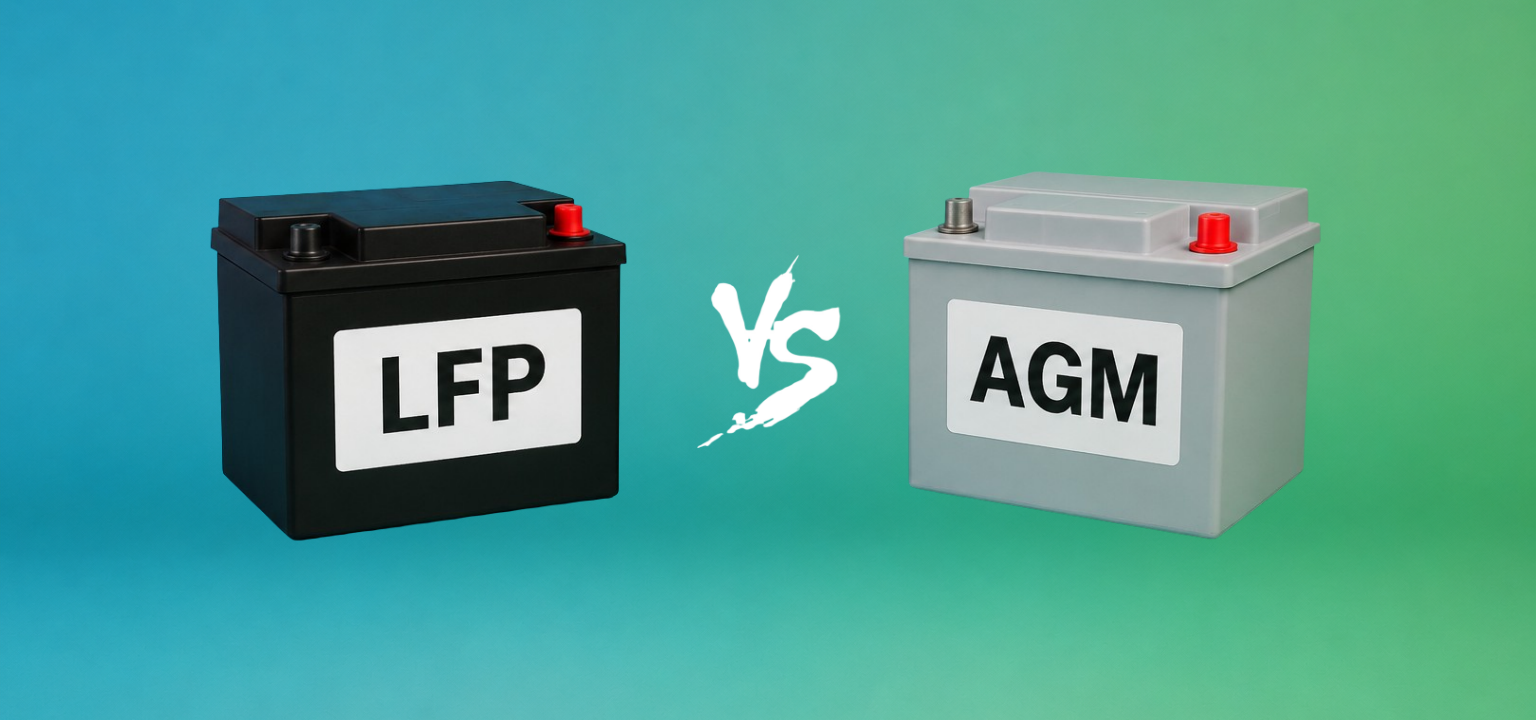
3. LiFePO4 vs AGM – Full Comparison Table (2026 Data)
| Feature | LiFePO4 (LFP) | AGM Lead-Acid |
| Energy Density | 90–180 Wh/kg (2.5–3.5× higher) | 50–70 Wh/kg |
| Cycle Life (80–100% DoD) | 3,000–7,000+ cycles | 300–800 cycles |
| Usable Depth of Discharge | 80–100% daily | 50–70% recommended |
| Charging Time | 1–3 hours | 6–12+ hours |
| Charge Efficiency | 98–99% | 85–90% |
| Cold Performance | Reduced below 0°C (heater recommended) | Excellent to –40°C |
| Weight (same usable capacity) | 1/2 to 1/3 of AGM | Very heavy |
| Self-Discharge | 1–3% per month | 3–5% per month |
| Safety | Extremely safe | Extremely safe |
| Upfront Cost | 2–4× higher | Lowest |
| Cost per Cycle (long-term) | Much lower | Much higher |
4. Winner by Application – 2026 Quick Reference
| Application | 2026 Winner | Why |
| Solar & Off-Grid Storage | LiFePO4 | Longer life, 100% DoD, lighter |
| Full-Time RV / Van Life | LiFePO4 | Weight savings + daily cycling |
| Weekend RV / Marine | AGM or LiFePO4 | AGM wins on budget |
| Marine House Bank (heavy use) | LiFePO4 | Weight & space matter on boats |
| UPS / Backup / Alarm Systems | AGM | Lives on float, cold-proof, cheap |
| Extreme Cold (regularly < –20°C) | AGM | No low-temp cutoff problems |
| Car / Boat Starting Battery | AGM | Best CCA & lowest price |
| Forklifts / Robotics / Floor Machines | LiFePO4 | Survives thousands of cycles |
5. Pros & Cons – At a Glance
LiFePO4 Pros 3× energy density · 6–15× longer life · 100% usable capacity · Fast charging · Low self-discharge
LiFePO4 Cons Higher upfront cost · Needs low-temp protection in extreme cold
AGM Pros Lowest price · Best cold-cranking & extreme-cold performance · Perfect for standby/float · No BMS complexity
AGM Cons Heavy & bulky · Only 50–70% usable · Dies fast with daily deep cycling · 15%+ charging losses
6. Final Verdict – What Should You Actually Buy in 2026?
Buy LiFePO4 if you want the best long-term value for: solar/off-grid, full-time RV or marine house banks, electric vehicles, robotics, or any daily deep-cycle use.
Buy AGM if:
- Budget is king and you rarely deep-cycle
- You live/operate in extreme cold without wanting heaters
- The battery will sit on standby 99% of the time (UPS, security, starting batteries)
Your real-world usage pattern — not just what’s newer or “greener” — is still the #1 deciding factor. Choose the right tool for the job, and either battery will serve you well for years.Ready to upgrade? Check current prices for a 12V 100Ah LiFePO4 replacement for AGM batteries and see the difference yourself.