Sodium-ion Battery Cells Explained: Capacity, Format & Real Numbers
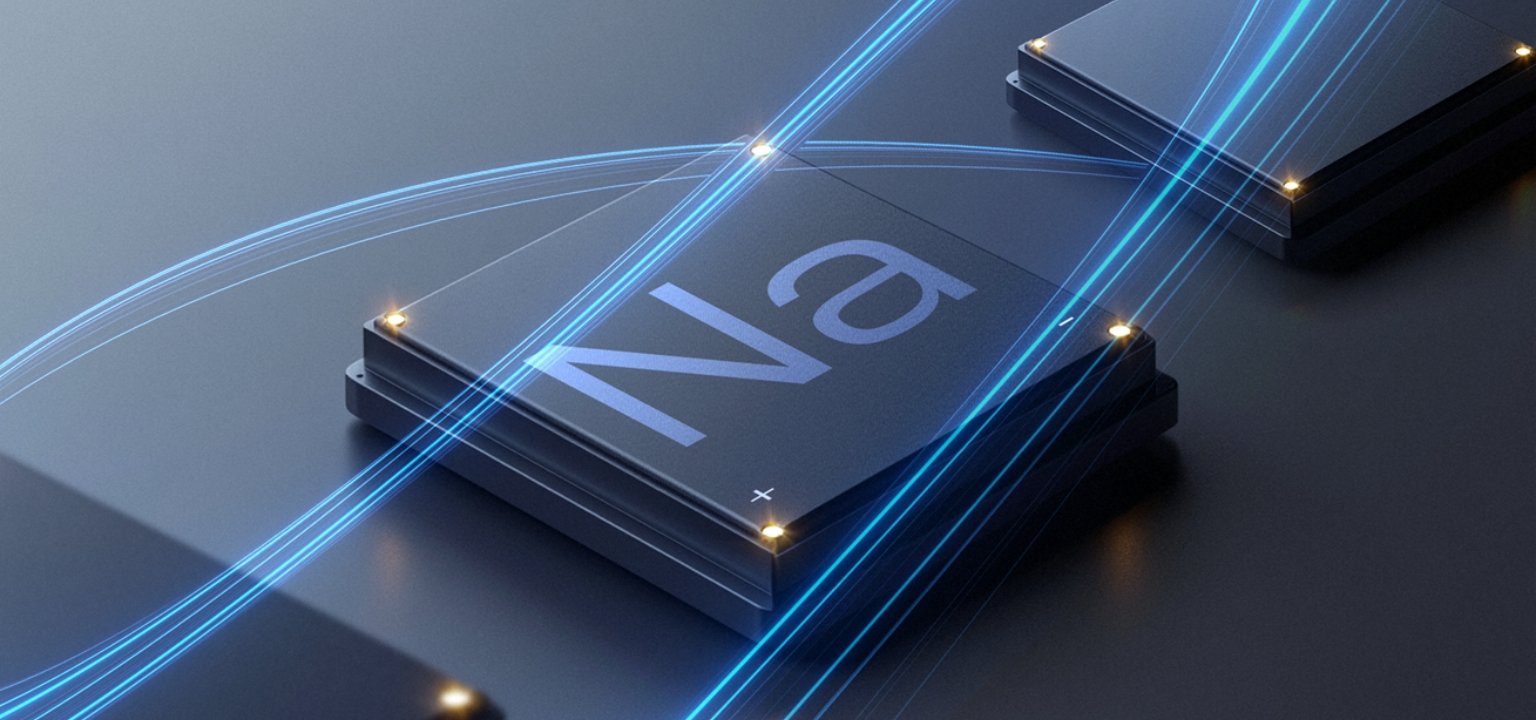
As mentioned in our previous video, sodium-ion batteries are a relatively new and promising alternative to lithium-ion batteries. They offer key advantages: lower cost, abundant raw materials (sodium vs. lithium/cobalt), superior cold-temperature performance (retaining >90% capacity at -30°C), and ultra-fast charging (up to 5C–10C rates, full charge in 6–12 minutes).
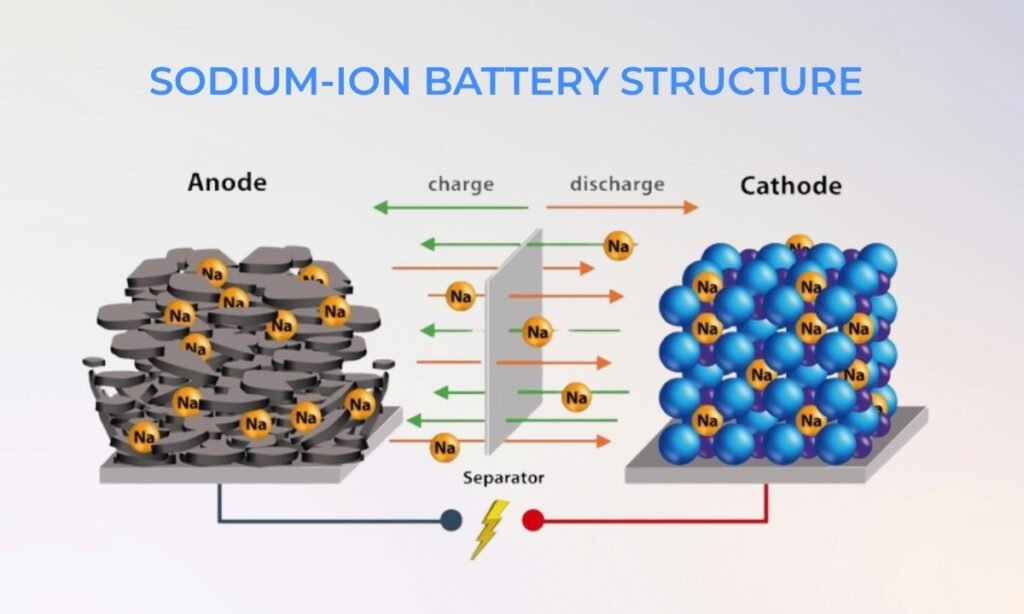
Designed for targeted applications—such as grid-scale energy storage, commercial vehicles, and short-range EVs—sodium-ion cells are engineered with identical external dimensions to common lithium-ion formats. While manufacturers pursue diverse chemistries (e.g., layered oxides, Prussian blue analogs, hard carbon anodes), the physical form factor remains standardized for drop-in compatibility.
Why identical size?
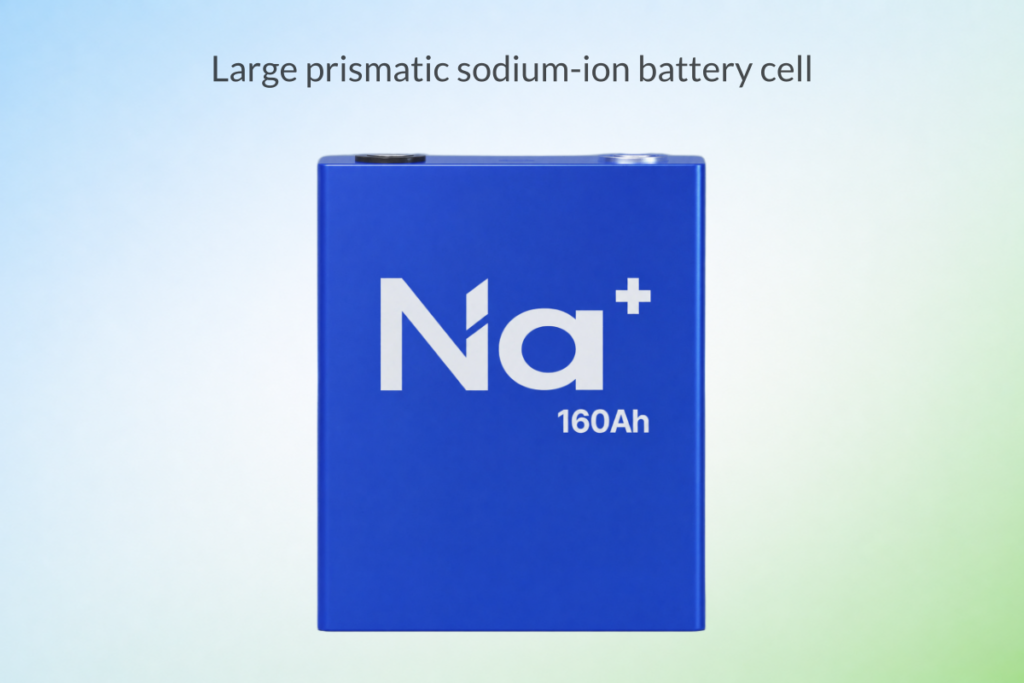
It enables direct replacement in existing battery packs, production lines, and end-use systems—reducing the need to redesign BMS, thermal management, or mechanical fixtures. This plug-and-play approach accelerates adoption and lowers integration costs. CATL, for example, has explicitly designed its newest large-format sodium-ion storage cell to share the same enclosure as its existing 587 Ah lithium storage cell.
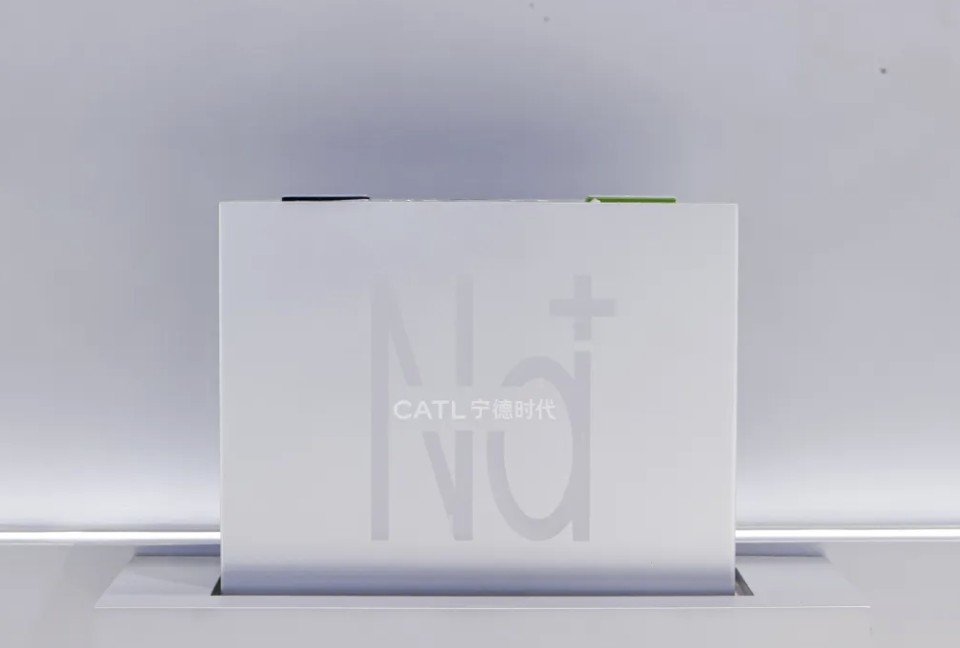
Courtesy of CATL
Below is a capacity comparison for major sodium-ion cell formats vs. comparable lithium-ion (LFP or NMC) cells. Figures are drawn from manufacturer datasheets and independent testing where available (HiNa, CATL, Farasis, Natron, Tiamat). Some values—particularly at the large-prismatic end—are still emerging as products move from announcement to shipping volume, so treat ranges as indicative rather than final.
| Type | Sodium-Ion Capacity (Ah) | LFP or NMC Capacity (Ah) |
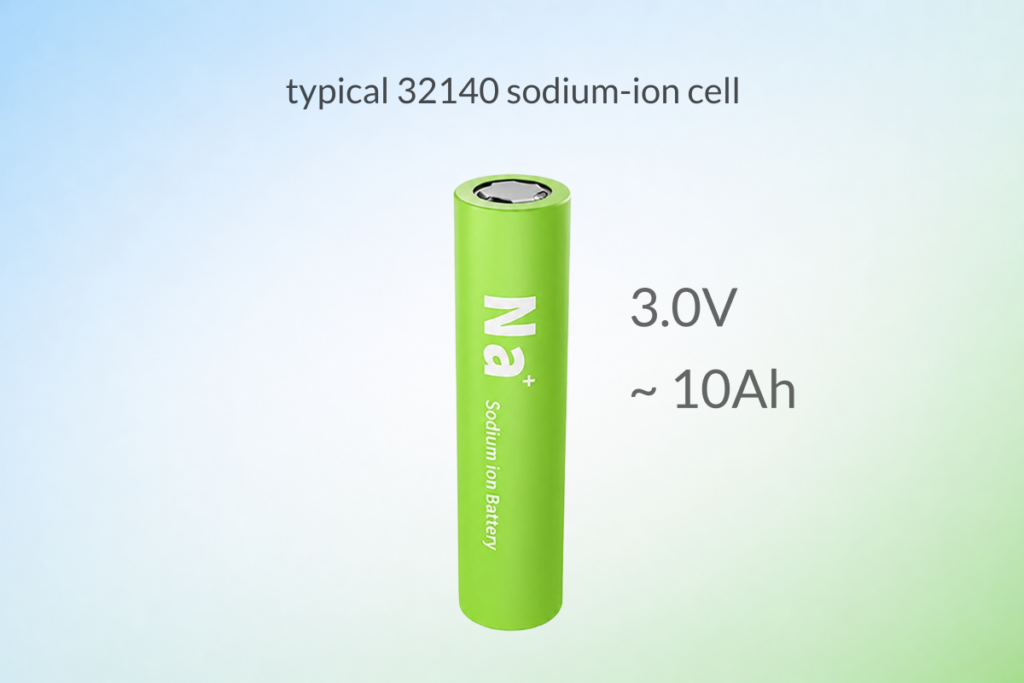
| Cylindrical 32140 | ~10 Ah (e.g., HiNa NaCR32140: 10 Ah in volume production) | 15–18 Ah |
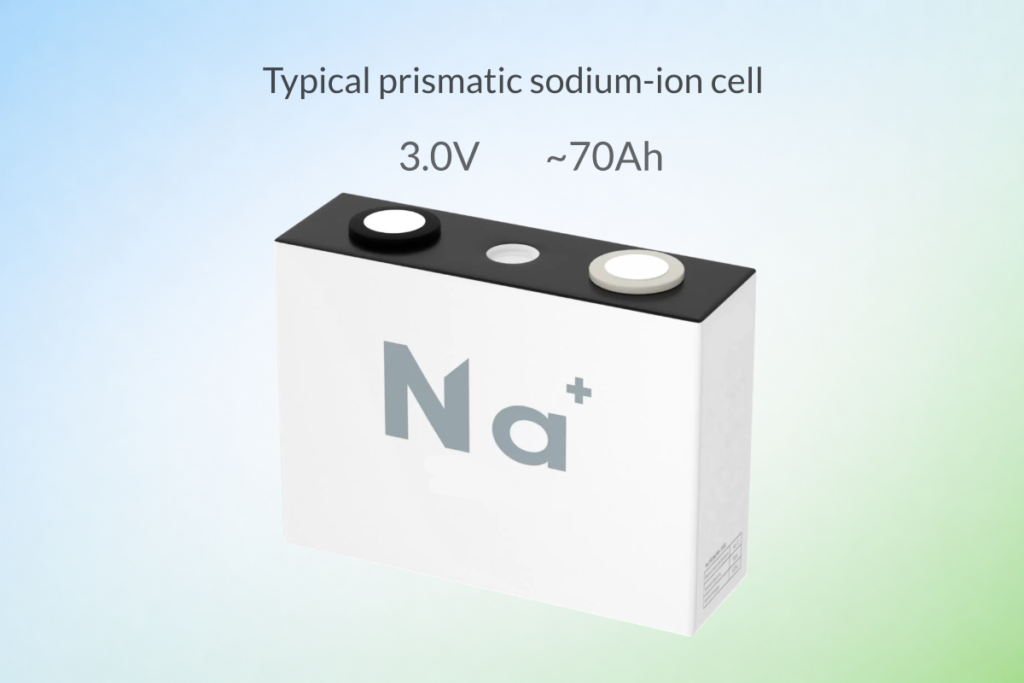
| Prismatic (small/mid format) | Roughly 50–75% (50-75Ah)of an equivalent LFP cell’s capacity in the same format, depending on chemistry and generation | 100–105 Ah (Varies by format) |
| Prismatic (large format, grid/EV storage) | CATL’s newest large-format sodium-ion storage cell is a 300+ Ah product, built on the same platform as its 587 Ah lithium storage cell | ~587 Ah (CATL’s current large-format lithium storage cell) |
Key Insights from the Table:
- Cylindrical 32140: A widely adopted cylindrical format (33.2 mm × 140 mm), gaining traction in e-bikes, power tools, and small energy storage modules. HiNa’s commercial 32140 cell delivers 10 Ah at roughly 110 Wh/kg—about 55–65% of a comparable LFP cell’s capacity in the same shell—while offering strong cycle life (datasheet figures cite 3,000+ cycles at high capacity retention) and high discharge rates (10C continuous, 15C peak on some variants).
- Prismatic (small/mid): Common in residential BESS and light EVs. Farasis has published sodium-ion cell specs in the 140–180 Wh/kg range with 3,000+ cycles and strong low-temperature retention (>90% at -20°C), and has already supplied cells for a production EV (JMEV EV3). Exact Ah figures for specific form factors vary by generation and aren’t all publicly confirmed—worth verifying directly with the manufacturer before quoting a number.
- Prismatic (large): Dominant in grid storage and heavy-duty vehicles. CATL’s Naxtra platform (launched April 2025, entering mass production in stages through 2026) reports up to 175 Wh/kg energy density, 5C peak charging, and operation from -40°C to +70°C, with a companion large-format storage cell built to share dimensions with CATL’s existing 587 Ah lithium cell. CATL and Changan’s Nevo A06 is set to become the first mass-production EV using sodium-ion packs, expected mid-2026.
Trade-Offs & Sweet Spots:
| Metric | Sodium-Ion Advantage | Lithium-Ion (LFP/NMC) Edge |
| Cost per kWh | 20–40% lower | Higher material cost |
| Energy Density | 100–175 Wh/kg | 160–260 Wh/kg |
| Cycle Life | 3,000–6,000+ cycles depending on products | 2,000–4,000 cycles typical |
| Fast Charging | Up to 5C in commercial products; higher C-rates in power-optimized variants | 1C–3C typical |
| Temperature Range | Down to -40°C with high capacity retention; some products claim function to -50°C | -20°C to +55°C (LFP) |
| Supply Chain Risk | Near-zero (no Li, Co, Ni dependency) | Exposure to lithium/cobalt price and supply swings |
Bottom Line
Sodium-ion isn’t a full replacement for long-range EVs—yet. But in cost-sensitive, long-cycle, or extreme-environment applications, it’s moving from lab to production fast: CATL’s Naxtra is heading into its first mass-production passenger vehicle in 2026, and multiple manufacturers (HiNa, Farasis, BYD) are scaling gigafactory-level capacity.
For pack builders: Always verify dimensional drawings and BMS protocol compatibility directly with the manufacturer—don’t assume drop-in compatibility across chemistries without checking current datasheets, as specs are moving quickly. Test in your actual thermal envelope, especially if you’re relying on the cold-weather advantage.
Note: Capacities are nominal and vary by C-rate, temperature, and depth of discharge. Several figures in this space (particularly large-format prismatic Ah ratings) are still stabilizing as products move from announcement to shipping volume—recommend a final spec check against current manufacturer datasheets before publishing.