What Is a LiFePO₄ Battery? Complete Guide to LFP Technology (2026)
As lithium-ion technology continues to evolve, LiFePO₄ (LFP) batteries have become one of the most widely used and trusted battery types. They are known for their high safety, long life, and excellent cost performance, making them popular in electric vehicles, energy storage systems, and many commercial applications.
This guide explains what LiFePO₄ batteries are, how they work, and why they are becoming the preferred choice across many industries.
1. What Is a LiFePO₄ Battery?
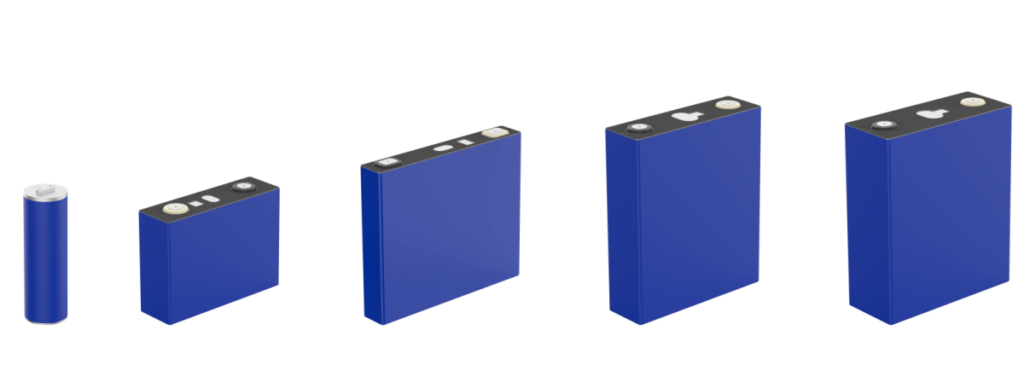
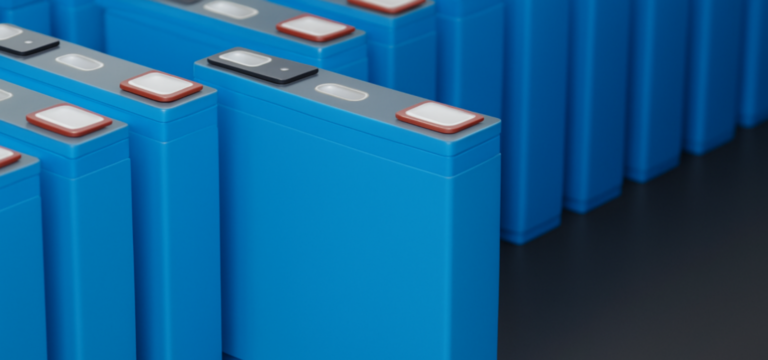
A LiFePO₄ battery, short for lithium iron phosphate battery, is a type of rechargeable lithium-ion battery. It uses:
- Lithium iron phosphate (LiFePO₄) as the positive cathode
- Graphite (carbon) as the negative anode
A single LFP cell has a rated voltage of 3.2V, and its charging cut-off voltage is usually 3.6V–3.65V.
Because of its chemical stability and safety, LFP has become one of the most reliable lithium battery technologies available today.
2. How It Works (Simple Explanation)
All lithium-ion batteries work by moving lithium ions between the cathode and anode. This movement creates electrical current.
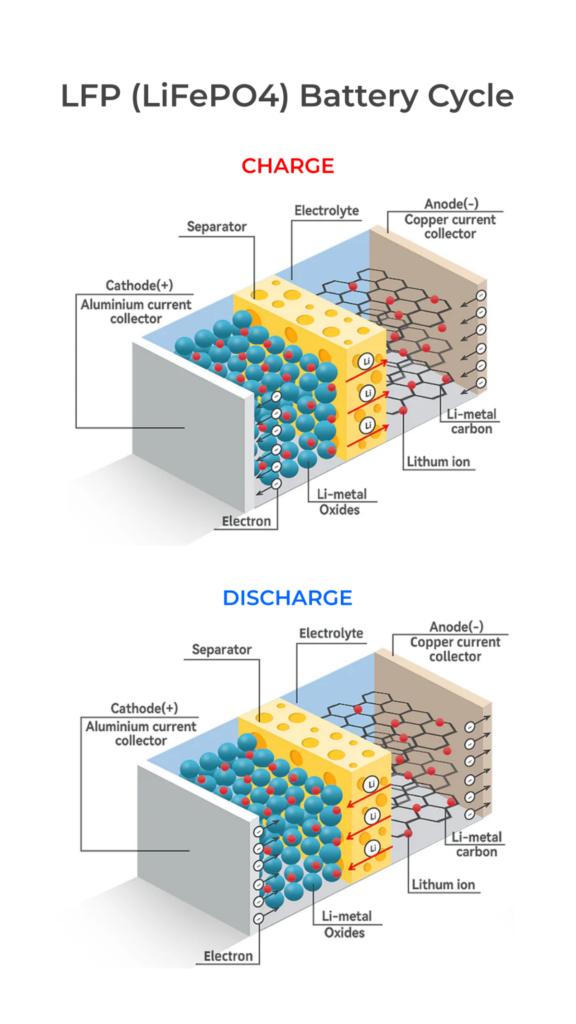
During charging
- Lithium ions leave the LiFePO₄ cathode
- Travel through the electrolyte
- Pass the separator
- Enter (intercalate into) the graphite structure of the anode
During discharging
- The process reverses
- Lithium ions move back from the anode to the cathode
- Energy is released to power the device
This simple and stable ion movement is what gives LFP its long cycle life and excellent safety.
3. Advantages of LiFePO₄ Batteries
Long lifespan
LFP has an exceptionally stable olivine structure. Lithium ions can move in and out with minimal stress, allowing 2,000–6,000 charge cycles, far more than many other chemistries.
Lower cost
LFP uses abundant materials such as iron and phosphate. No nickel or cobalt means lower cost and a more stable supply chain.
High safety
LFP has the highest thermal stability among common lithium chemistries. It is highly resistant to overheating and thermal runaway. This makes it ideal for EVs, home storage, and commercial systems.
More eco-friendly
LFP does not use cobalt or nickel, which reduces environmental and mining-related issues. It contains fewer toxic substances and is easier to recycle. Its long life also means fewer batteries need to be replaced, reducing overall waste.
4. Disadvantages of LiFePO₄ Batteries
- Lower energy density
As of 2025:
- LFP: 140–175 Wh/kg
- NCM: 200–300 Wh/kg
LFP stores less energy in the same volume or weight.
- Slightly slower charging
Both support fast charging, but NCM still has a small performance advantage.
- Poor low-temperature performance
Cold temperatures slow lithium-ion movement and increase internal resistance. This makes LFP less efficient in cold climates compared to NCM.
5. More Eco-Friendly (Expanded)
LiFePO₄ batteries avoid the use of cobalt and nickel—two metals known for high environmental cost, supply chain risks, and complex mining processes. Instead, LFP uses stable, abundant materials: iron, phosphate, lithium, and carbon.
The chemistry also contains fewer toxic materials, making manufacturing safer.
At the end of its life, LFP is easier to recycle because its material structure is simpler and more stable.
Combined with a long cycle life, LFP creates significantly less environmental impact over its lifetime.
6. Common Applications
Because of its safety and durability, LFP is used in many applications:
- Large Electric Vehicles
- Electric buses
- Electric passenger cars
- Hybrid vehicles
- Sightseeing vehicles
- Light Electric Vehicles
- E-bikes
- Golf carts
- Forklifts
- Cleaning vehicles
- Electric wheelchairs
- Small flatbed trucks
Power Tools
- Drills
- Chainsaws
- Lawnmowers
Remote-Control Toys & Hobby Products
- RC cars
- RC boats
- RC airplanes
Energy Storage Systems
- Solar storage
- Wind power storage
- Home ESS
- Commercial and industrial ESS
- Backup Power & Safety Lighting
- UPS systems
- Emergency lamps
- Warning lights
- Mining lamps
- Battery Replacements
- 3V lithium battery replacements
- 9V NiCd/NiMH battery replacements
- Camera battery alternatives
- Medical and Portable Devices
- Portable monitors
- Small medical equipment
- Handheld devices
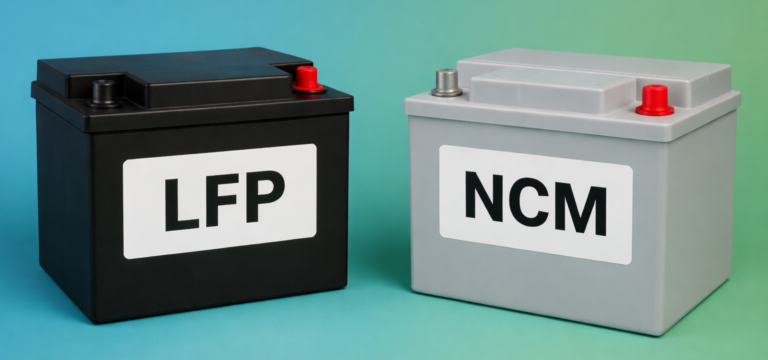
7. LFP vs NCM: What’s the Difference?
Both battery types are useful, but they serve different needs.
| Battery chemistry | Best for | Advantages |
|---|---|---|
| NCM (Nickel-Cobalt-Manganese) | Long driving range | Higher energy density |
| High-performance EVs | Slightly faster charging | |
| Aviation (eVTOL) | High power-to-weight ratio | |
| Smartphones and electronics | Compact and lightweight | |
| LFP (Lithium-iron phosphate) | Energy storage | Safer and more stable |
| Commercial EV fleets | Much longer cycle life | |
| Warm climate EVs | Lower cost | |
| Industrial use | Highly durable |
In short:
- NCM = higher energy.
- LFP = safer, cheaper, longer life.
8. Current Market Trends
LFP in EVs
- More automakers now offer LFP packs, including Tesla, BYD, Ford, VW, and others.
- LFP is increasingly used in standard-range EVs due to its safety and lower cost.
Energy Storage Boom
Home and grid energy storage systems heavily rely on LFP because:
- They are cycled daily
- They must operate safely
- They need long life and low cost
Why Tesla, BYD, and CATL Promote LFP
- No cobalt/nickel supply issues
- Safe for hot climates -Ideal for mass-market EVs
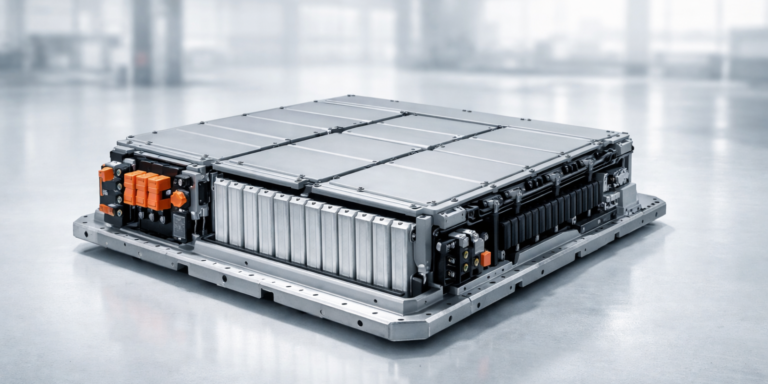
- Easy to scale with large-format cell technologies like blade cells and prismatic LFP cells.
LFP’s global share continues to rise rapidly.
9. Buying Guide Tips
- What Specs to Check
- Capacity (Ah / Wh)
- Nominal voltage
- Continuous and peak discharge rating (C-rate)
- Cycle life
- Temperature range
- The Importance of a Good BMS
A high-quality BMS should include:
- Overcharge protection
- Over-discharge protection
- Temperature protection
- Cell balancing
- Short-circuit protection
How to Avoid Low-Quality Products
- Stick with reputable brands
- Check the weight (too light = low-grade cells)
- Ask for datasheets and test reports
- Ensure Grade A cells, not recycled ones
Key Certifications
- UN38.3
- UL1973 / UL9540A
- IEC62619
- MSDS Certifications ensure that the battery meets global safety and transport standards.
10. Summary / Conclusion
LiFePO₄ (LFP) batteries have become one of the most important battery technologies today. They offer an excellent balance of safety, cost, and durability, making them perfect for energy storage, commercial vehicles, and everyday applications. Although LFP has lower energy density than NCM, its strengths—especially long cycle life and high thermal stability—make it the preferred choice in many industries.
As major manufacturers continue to improve LFP technology, its role will only grow stronger in the global shift toward electrification and renewable energy.