Custom Forklift Batteries: LiFePO4 Solutions for Dealers and Fleet Owners
1. Introduction: From Battery Replacement to Custom Forklift Battery Solutions
Storage batteries are, in most cases, fairly standardized — a 10kWh residential unit from one manufacturer looks a lot like a 10kWh unit from another. Forklift batteries don’t work that way. A forklift battery is almost always a replacement for an existing lead-acid unit inside a specific truck, which means the battery has to match what’s already there — physically and electrically — not the other way around.
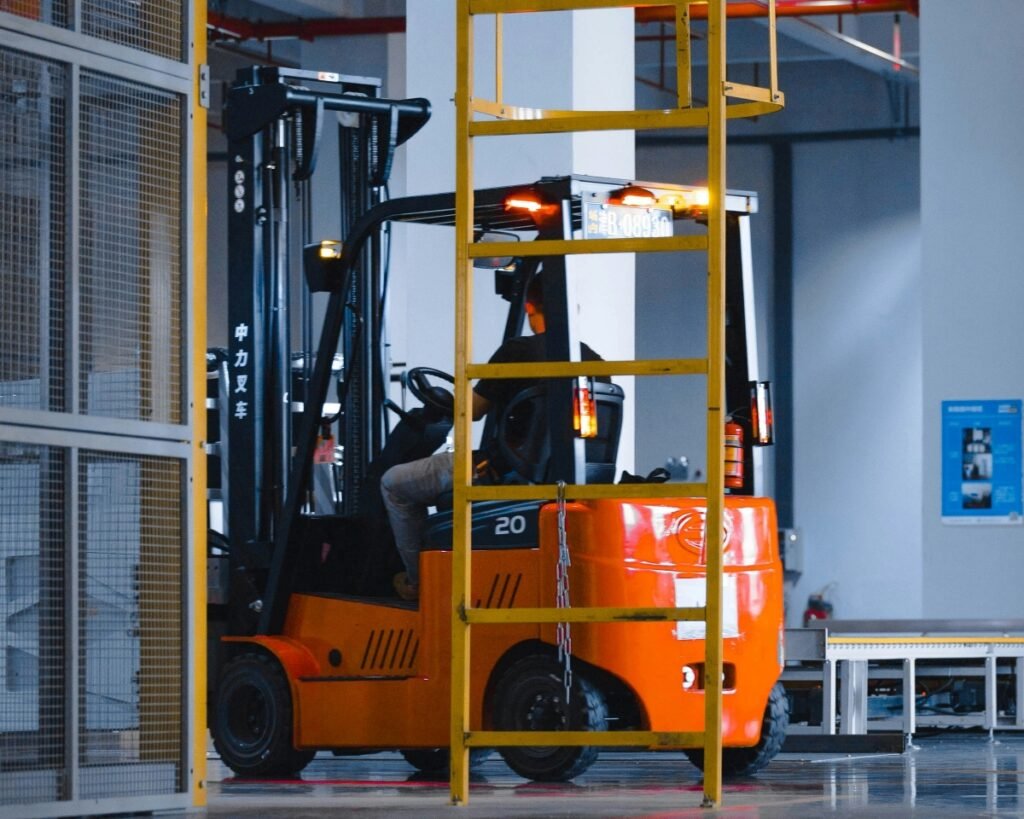
That changes what “the right battery” actually means. The key requirements are matching the original electrical characteristics and physical fit as closely as possible: voltage and capacity, continuous and peak power, C-rate (often 1C or higher for forklift duty), dimensions and weight, communication protocol, and charging requirements.
Some manufacturers offer general custom builds across many battery categories. Wanex focuses specifically on forklift batteries, and that focus exists for a reason: forklift applications are demanding in ways that reward specialization rather than a generic custom-build capability. In our experience, every fleet tends to have its own particular set of requirements — there’s rarely a single “standard” pack that fits every application, even within trucks that look similar on paper. The real challenge isn’t making a lithium battery; it’s matching a specification accurately and reproducing that match consistently, order after order.
2. Forklift Batteries: Designed for Intensive Duty Cycles
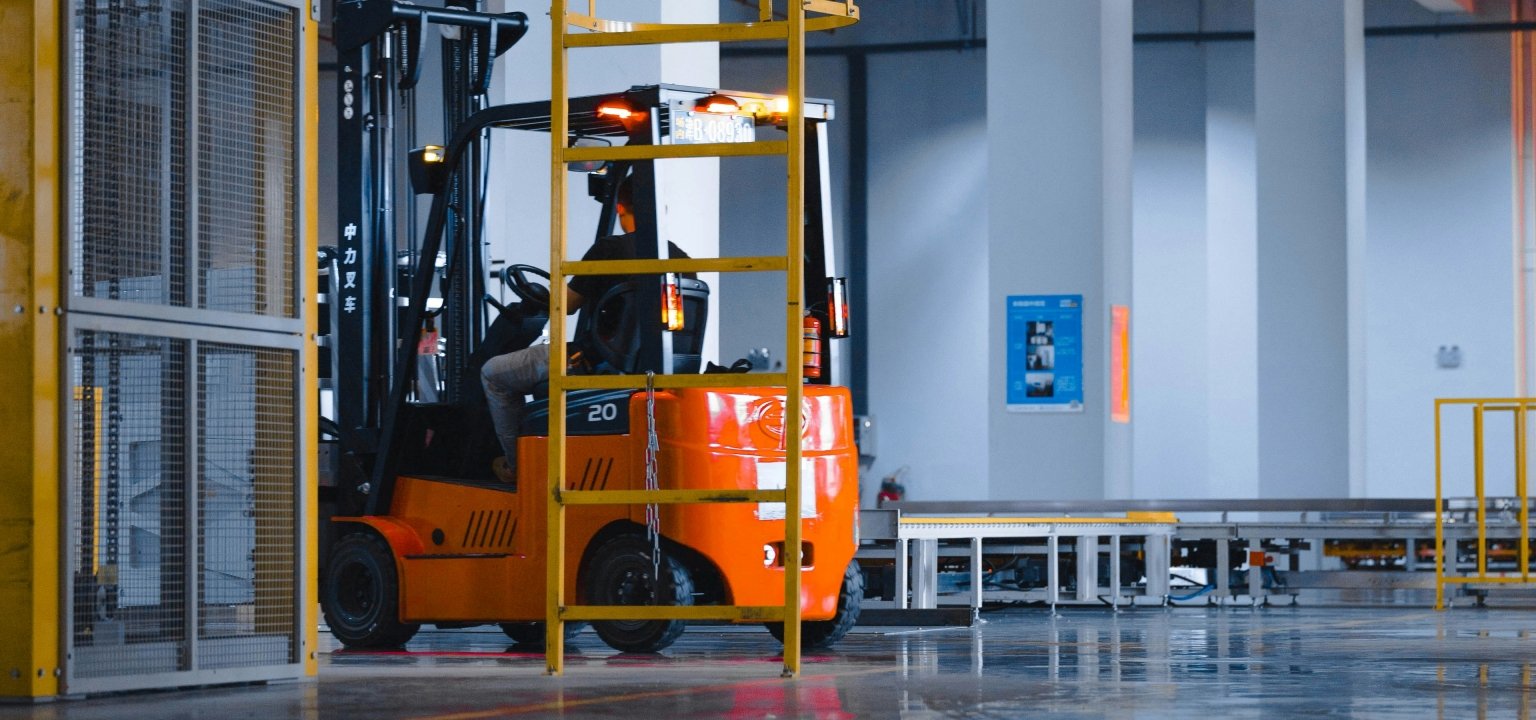
Forklift applications are demanding in a way most other battery applications simply aren’t, and this is where the difference between “a lithium battery” and “the right lithium battery” shows up most clearly.

What forklift batteries need to handle:
- High discharge current — lifting, driving, and braking under load all draw significant current, often well beyond what a similarly-sized battery in a lighter-duty application would ever see.
- 1C or higher charging requirements — many fleets need fast turnaround between shifts, which pushes charging rates well beyond what residential storage batteries are designed for.
- Long operating hours — multi-shift operations can mean the battery is working most of the day, day after day.
- Opportunity charging — topping up during breaks rather than one long overnight charge, which the BMS and cell chemistry both need to tolerate well without accelerated degradation.
- Battery compartment dimensions — forklift battery compartments are tightly sized, with little tolerance for a pack that’s slightly too large or the wrong shape.
- Weight requirements and counterbalance considerations — a forklift’s battery is also part of its counterweight system. A lighter lithium pack can actually require added ballast to maintain the truck’s stability and rated lift capacity — this is one of the most commonly overlooked details in a lead-acid-to-lithium conversion.
- BMS and forklift communication — integration with the truck’s onboard systems, and often with the fleet’s telematics or fleet management software.
- Safety and thermal management — sustained high-current cycling generates heat that needs to be managed reliably across long duty cycles and, often, warm warehouse or outdoor yard environments.
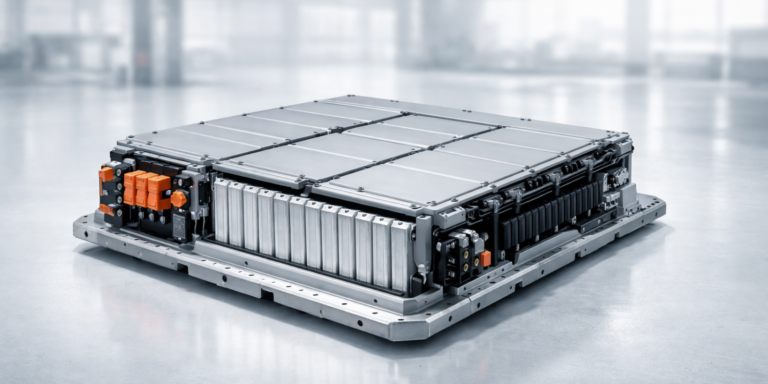
Typical solution: 48V LiFePO4 forklift battery pack
| Spec | Typical Value |
| Nominal voltage | 48V |
| Capacity | 300Ah – 600Ah |
| Continuous discharge | 1C |
| Peak discharge | 2C (short duration) |
| Charging | Fast/opportunity charging capable |
| Communication | CAN bus, integrated with truck controller |
| Cycle life | 4,000+ cycles at 80% DoD |
| Weight/counterbalance | Engineered to match OEM ballast requirements |
Forklift fleets don’t all run on 48V — depending on the truck class and application, custom solutions across 24V, 36V, 48V, and 80V platforms are common, and the right voltage is dictated by the vehicle, not the battery manufacturer’s preference. The figures above are illustrative; actual specifications should always be matched to the specific truck model and its original battery compartment.
3. Lead-Acid Replacement: Why Forklift Fleets Are Moving to LFP

Across forklift fleets, the underlying technology shift is the same one playing out across most industrial battery applications: a move from lead-acid to LiFePO4.
| Factor | Lead-Acid | LiFePO4 |
| Weight | Higher | Lower |
| Usable capacity | Lower | Higher |
| Charging | Slower | Faster |
| Maintenance | Higher | Lower |
| Cycle life | Shorter | Longer |
| Energy efficiency | Lower | Higher |
| Initial cost | Lower | Higher |
| Long-term operating cost | — | Potentially lower |
It’s worth being factual about this rather than treating it as a universal upgrade. LiFePO4 isn’t automatically the better choice for every forklift application — a low-utilization truck with light, infrequent cycling and a tight upfront budget may still be reasonably served by lead-acid. The clearer case for LFP shows up in multi-shift or opportunity-charging operations, where higher initial cost is offset by real savings elsewhere: less downtime for charging and watering, no battery-swap labor, longer service life, and lower total cost of ownership across the fleet’s operating life. The right comparison is always total cost and operational fit, not chemistry for its own sake.
4. What Dealers and Fleet Owners Should Expect From a Forklift Battery Manufacturer
Given how application-specific forklift batteries are, the manufacturer relationship matters more than it would for a commodity storage battery. A capable manufacturer should be able to provide:
- Specification matching
- Custom dimensions
- Custom voltage and capacity
- BMS configuration
- Communication integration with the truck’s onboard systems
- Connector and cable customization
- Charger compatibility
- Cell selection
- Prototype and sample development
- Testing and validation
- Production consistency
- Warranty and after-sales support
The underlying point is simple: a forklift battery manufacturer shouldn’t just be selling batteries — they should be delivering a battery solution that fits the truck. Anyone can quote a 48V lithium pack. The manufacturers worth working with are the ones who can turn a fleet’s actual duty cycle and truck specifications into a pack that fits, works, and keeps working, at the volume a dealer or fleet actually needs.
5. From Specification to Production: How a Custom Forklift Battery Project Works
A custom forklift battery project typically follows a straightforward path:

Requirement → Engineering → Prototype → Testing → Sample Approval → Mass Production
In practice, that looks like:
- Requirement gathering — the customer provides truck and battery specifications, including compartment dimensions, electrical requirements, duty cycle, and any existing components that need to be matched.
- Engineering evaluation — the manufacturer reviews the requirements and confirms feasibility, flagging any trade-offs early — counterbalance weight being a common one.
- Design — battery pack design and BMS configuration, built around the confirmed specification.
- Prototype and sample production — a working sample is built to the design.
- Testing and validation — the customer tests the sample in the actual truck, confirming fit, performance, and integration before committing to volume.
- Mass production and ongoing supply — once validated, the design moves into production, with consistency maintained across orders over time.
This process is what separates a manufacturer capable of genuine OEM/ODM work from one that can only offer a fixed catalog of standard packs.
6. Conclusion: One Truck Class, Many Battery Configurations
Forklifts across a fleet may all run on 48V systems, or all be labeled the same voltage class — but their actual battery requirements can differ significantly from one truck, duty cycle, and warehouse environment to the next.
For dealers and fleet owners, that means the useful question was never “Do you sell a 48V lithium battery?” Plenty of manufacturers can answer yes to that. The question that actually matters is: can you build the forklift battery that fits my truck, meets my electrical and duty-cycle requirements, and can be produced consistently at scale?