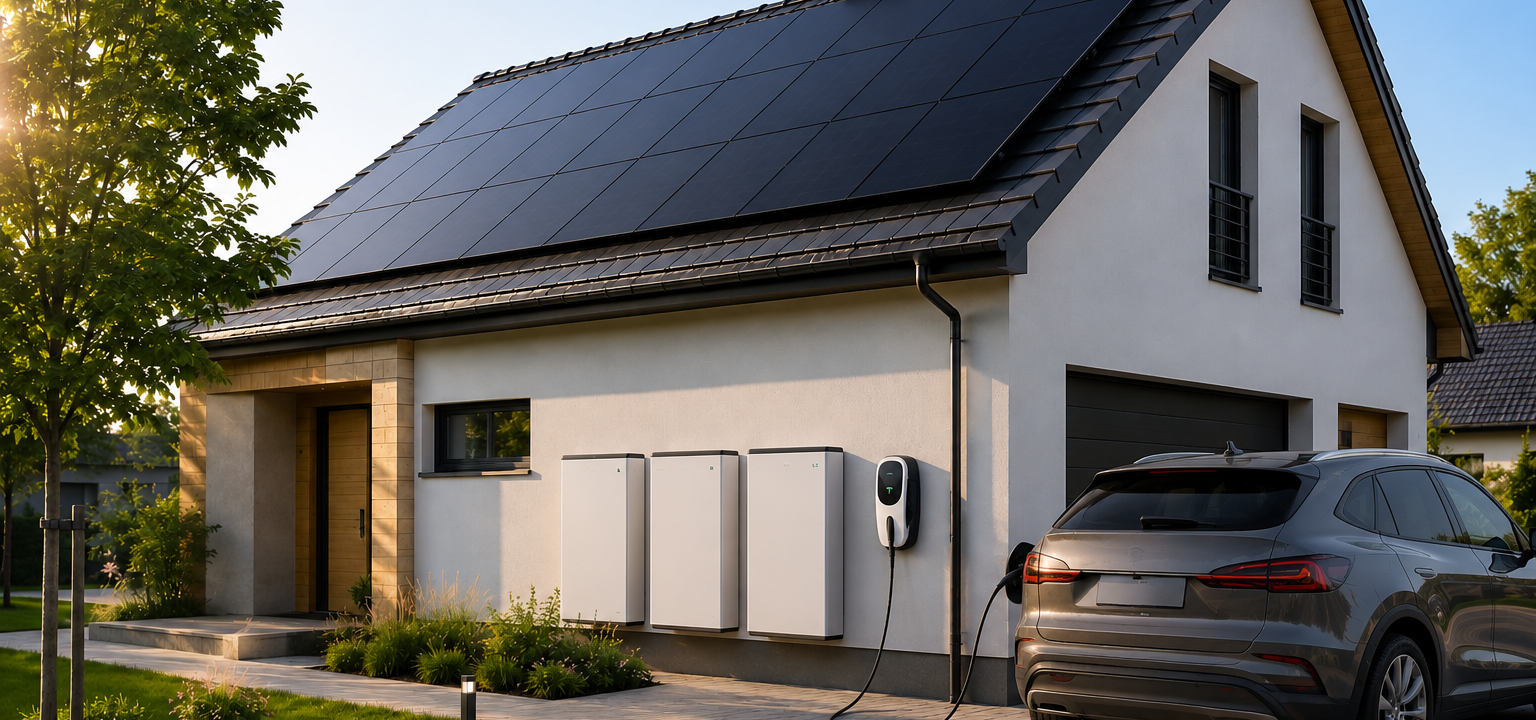
Why Solar + Battery Storage + EV Charging Is Becoming the Best ROI in Energy Right Now
I travel to Bangkok often for work. Back then, I was in the solar PV business. I remember the massive billboards lining the Airport Rail Link, right from where it emerges from underground at Suvarnabhumi Airport to that dramatic 90-degree turn. Back then, the ads were almost all Japanese car brands, with the occasional German name thrown in.

This year, the boards are still there, but the brands are gone. In their place: BYD, GWM, Geely, Xpeng. A Chinese EV lineup, wall to wall. On the roads, the shift is just as visible — more Chinese EVs on every trip I make.
I didn’t think much of it at first. Cars change, brands rise and fall. But it kept nagging at me, because I’m not in the car business, but in batteries — and every one of those EVs needs somewhere to plug in. That’s what actually brought me back to Bangkok this time. Not cars. Batteries.
What I’m Seeing on the Ground: Solar + Battery Storage + EV Charging
I had the chance to tag along on a few installations recently with our installer partners, and one thing kept coming up: more solar PV homeowners are adding batteries. Not because it’s trendy, but because the math around them has quietly changed.
Two things are pushing this. First, regulation — a lot of utilities now restrict or outright disallow exporting excess solar power back to the grid, so anything you generate and don’t use or store just gets wasted. Second, EVs. Once a household has one, the daily energy picture shifts: store the extra solar, use it to run the house and charge the car, and suddenly that “wasted” power becomes one of the better investments a family can make.
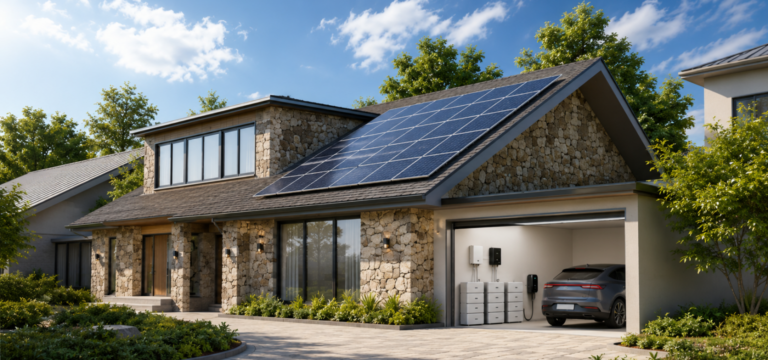
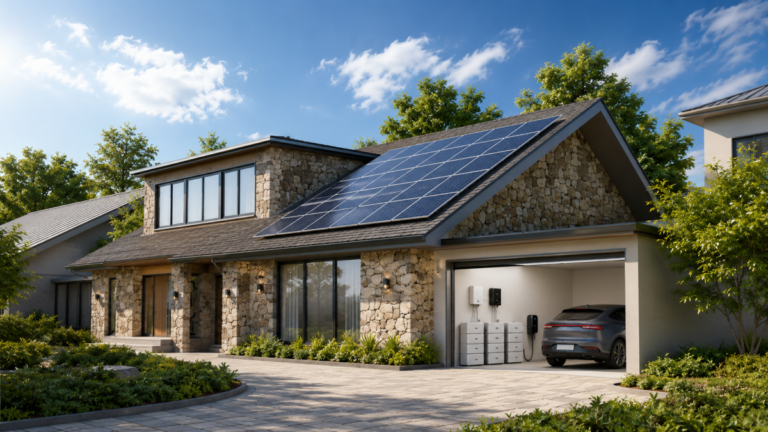
I know one family’s situation well enough to walk through the real numbers, because I supplied the batteries and inverter myself. They’d had a 5kW on-grid solar system on their roof for years — nothing unusual. When they added a Chang’an S05 EV, the new no-export rule meant the old setup couldn’t just dump excess power to the grid anymore, so it made sense to go further: they expanded to a 10kW PV array, swapped the old 5kW on-grid inverter for an 8kW hybrid one, and added a 30kWh battery bank. Now the solar goes toward the house and the car, instead of nowhere.
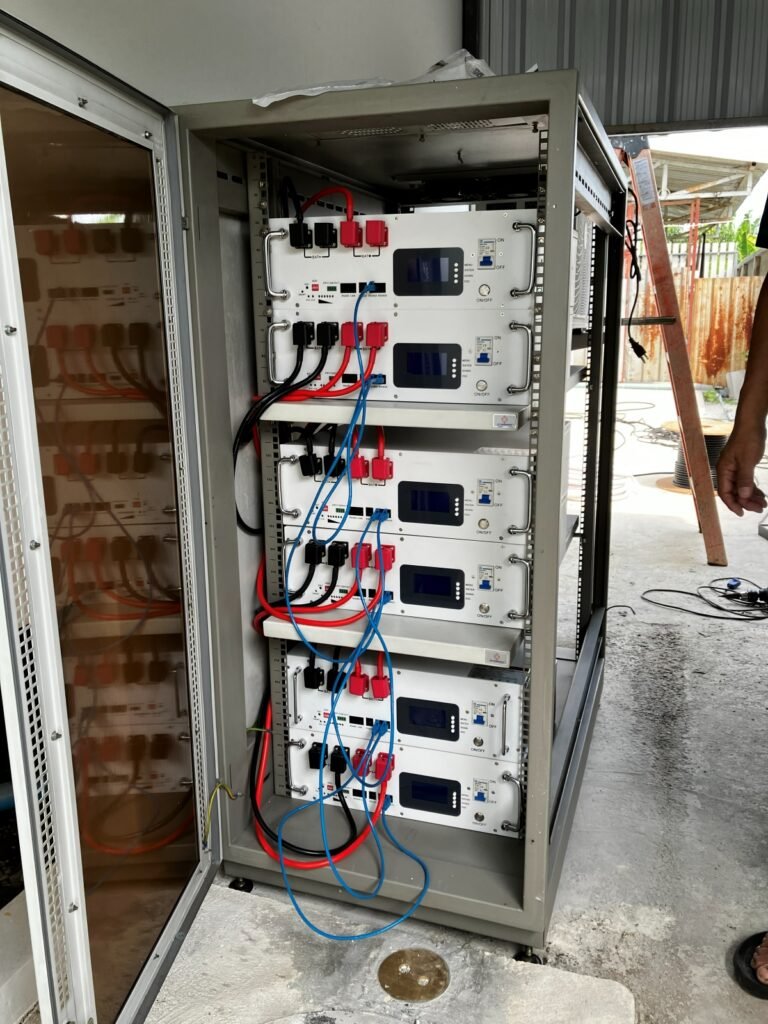
I can vouch for the cost because I was the one who priced it: all in, the expansion ran 180,000–200,000 Baht. The system should generate around 14,600 kWh a year. Split roughly 40% to the household and 60% to EV charging, and accounting for about 85% round-trip efficiency, that works out to:
- Household savings, at the residential grid rate of ~4 Baht/unit: about 19,800 Baht a year
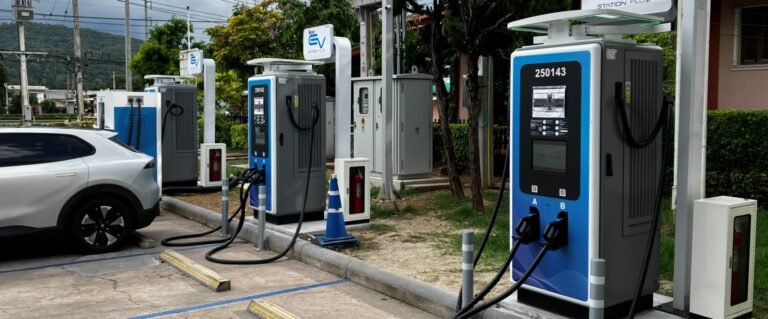
- EV charging savings, measured against what he’d otherwise pay at a public DC fast charger (those run 6–10 Baht/unit in Thailand depending on time-of-use and location — I used 8 Baht as a fair middle): about 59,600 Baht a year
Add it up and you get roughly 79,400 Baht a year in savings, which puts payback at around 2.3 to 2.5 years. That’s not a brochure number — it’s what I actually charged him.
Why It’s Even More Obvious for Commercial Buildings
A few trends are stacking on top of each other right now, and together they make the commercial case even stronger than the residential one.
Battery costs have genuinely collapsed. Lithium-ion cell prices have dropped roughly 70% over the past decade — from around $285/kWh in 2014 to about $80/kWh recently, based on Benchmark Mineral Intelligence data published by Our World in Data. Storage is now cheaper per kWh than solar panels are per watt in a lot of markets, which honestly still catches me off guard when I think about where prices were when I started in this industry.
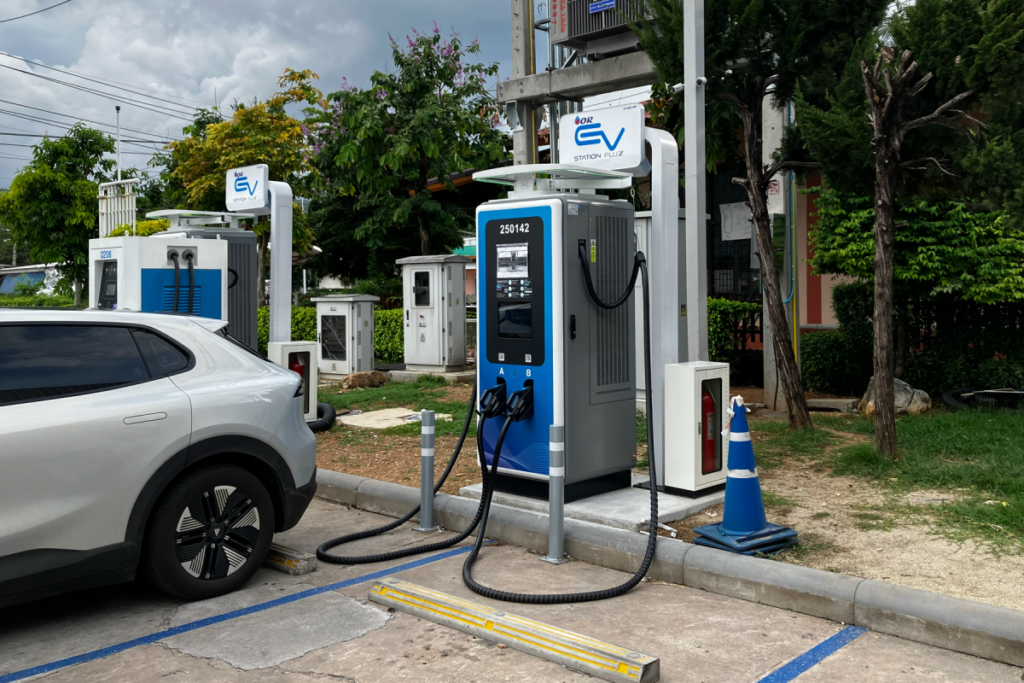
Electricity rates are a more nuanced story than “prices are skyrocketing,” and I think the nuance matters more than the headline. In Thailand, residential rates have stayed fairly flat — around 4 Baht/unit. Commercial rates are more layered: tariffs shift by demand tier (22–33kV, 69kV, and above) and time-of-use, generally landing somewhere between 4.4 and 5.5 Baht/unit. What’s really driving up commercial energy bills isn’t a blanket rate hike — it’s rising consumption from EV fleets and charging, plus peak demand charges that can quietly become the biggest line item on the bill. (In some other markets — parts of Europe and the Middle East, for example — commercial rates really have climbed more steeply in recent years. Worth checking local utility filings before leaning on that number, though; it doesn’t hold everywhere.)
There’s also a revenue angle that didn’t exist a few years ago. EV charging at a commercial site isn’t just a cost to absorb — employees and visitors pay to charge, the building owner earns from it, and the system pays itself back faster because of it. And solar carports do double duty: they generate power, but they also shade cars and equipment, which tenants notice and appreciate in ways that show up in satisfaction surveys even if they don’t show up directly in the payback spreadsheet.
A Project I’m Proud Of
One of ours: a mountain hotel in Thailand. Solar rooftop, 23kW. Hybrid inverter, 18kW. Battery bank, 100kWh. Depending on the season, the system generates somewhere between 70 and 120 kWh a day. At the hotel’s electricity rate of 8 Baht/kWh, that’s roughly 264,000 Baht saved a year, with payback landing in the 3 to 4 year range. This isn’t a projection on a slide — it’s a system running right now, already paying for itself.
The Hesitations I Hear Most Often
I’ve sat across the table from enough building owners to know the objections by heart, and they’re reasonable ones.
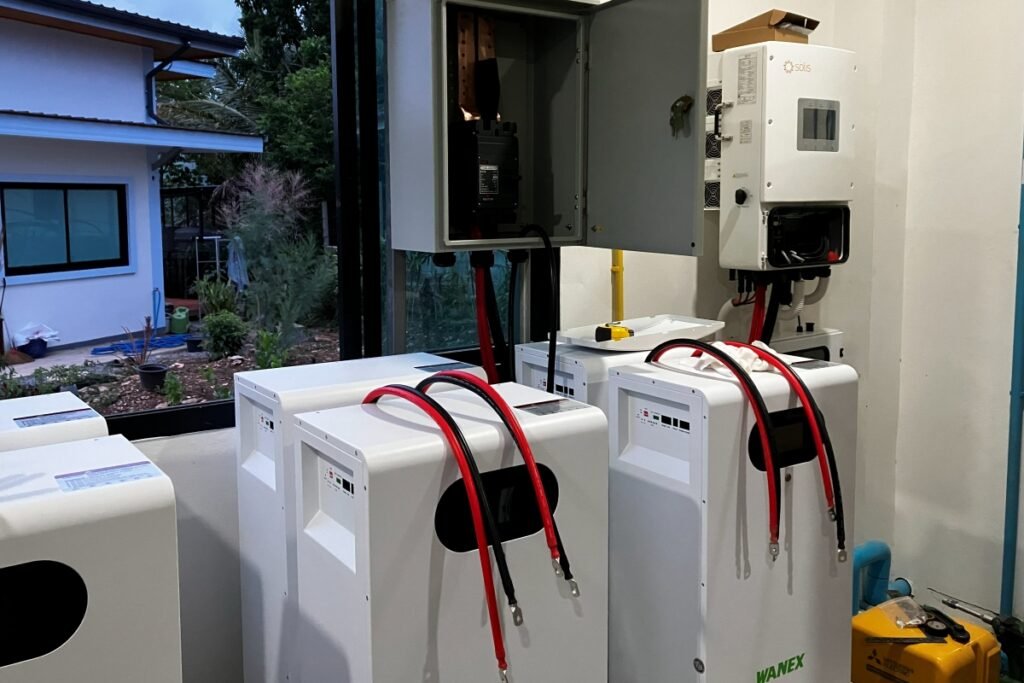
“I don’t want to juggle three different suppliers.” Fair — nobody wants to be the one coordinating warranty claims between a panel maker, an inverter company, and a battery supplier when something goes wrong. We deliver everything pre-integrated and bench-tested before it ships, with one point of contact for warranty.
“What if the pieces don’t play well together?” This is the one that actually worries me too, because firmware mismatches are a real and annoying failure mode. So we test the full system against simulated building loads in our own facility first — better to catch a mismatch on our bench than in your building.
“I don’t have anyone in-house who can evaluate these suppliers properly.” Understandable — this isn’t most facilities teams’ core expertise. We’ve spent over a decade in the battery business, with manufacturing experience and reference projects in Thailand and the US, so a lot of the noise has already been filtered out by the time it reaches you.
“The upfront cost is hard to justify to my board this year.” This is usually the real objection underneath the others, and it’s the fairest one. We work with financing partners and often suggest phasing the rollout — starting with whichever load has the fastest payback, often EV charging or peak-demand shaving — so the full capex doesn’t have to land in one budget cycle, and early savings help fund the next phase.
Where This Leaves Me
The commercial solar + storage + EV charging shift isn’t something on the horizon anymore — I’ve seen it on rooftops, in a family’s driveway, and on billboards that used to sell Japanese sedans and now sell Chinese EVs. The question I keep coming back to isn’t whether this happens. It’s whether a building owner rides it now, or explains to their board in 2027 why energy costs kept climbing while the building next door turned its parking lot into a source of income.
If you’ve been putting off running these numbers for your own property, I’m happy to walk through a load assessment and payback estimate — no obligation, just the same math I’ve laid out here, applied to your site.
Have you run the numbers on solar + storage + EV charging for a commercial property recently? What surprised you most — the payback, the complexity, or how much tenants actually care?