Dying EV Batteries Power a Circular Economy
China has unveiled the world’s first zero-carbon building that combines solar power, retired electric vehicle (EV) batteries, and cutting-edge digital technologies. This innovation not only...

Lithium-ion battery prices have plummeted over 70% from their 2022 peak of ~$0.25 per watt-hour to ~$0.1 per watt-hour today, with further declines expected as competition and technology advance. This affordability is making battery storage systems increasingly attractive for homeowners and small businesses, alongside commercial and utility-scale applications. Much like solar PV systems, a well-designed battery storage system can potentially pay for itself in a few years. But how do you calculate the return on investment (ROI) for a residential battery storage system, and what factors should you consider? This post breaks down the economic benefits, key considerations for energy arbitrage, and critical factors like battery degradation and operating conditions.

Economic Benefits of Residential Battery Storage
A residential battery storage system, typically under 100 kWh in capacity, offers several financial and practical advantages:
Calculating ROI: Focus on Energy Arbitrage
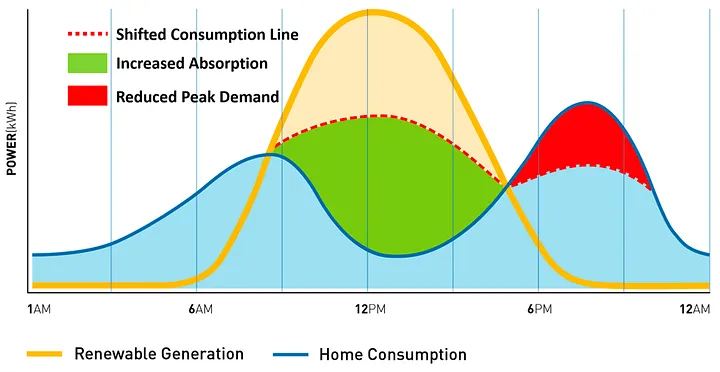
Energy arbitrage is a straightforward strategy: buy electricity from the grid when prices are low (e.g., off-peak hours), store it in the battery, and use or sell it when prices are high (e.g., peak demand periods). This approach capitalizes on price differences to save money or generate profits. Here’s a simple guide to calculating ROI for a battery storage system used for arbitrage:
Key Factors to Consider
Simplified ROI Calculation
To estimate ROI, use this formula:
[ \text{ROI} (%) = \frac{\text{Net Savings} – \text{Initial Cost}}{\text{Initial Cost}} \times 100 ]
Example:
This example suggests the system pays for itself in ~4.5 years ($3,000 / $657). However, adjust for degradation (reducing savings over time) and any additional costs.
Battery Performance Considerations
Battery performance significantly impacts ROI. Here’s what to keep in mind:
Additional Benefits
Beyond arbitrage, battery storage can:
Conclusion
Residential battery storage systems offer significant potential for cost savings, energy independence, and grid support through programs like VPPs. However, calculating ROI requires careful consideration of upfront costs, electricity tariffs, battery efficiency, degradation, and operating conditions. By modeling these factors, homeowners and small businesses can make informed decisions about integrating battery storage with solar systems or using it for arbitrage. As battery prices continue to fall, the case for residential storage grows stronger, paving the way for smarter, more sustainable energy use.
 by
by