Dying EV Batteries Power a Circular Economy
China has unveiled the world’s first zero-carbon building that combines solar power, retired electric vehicle (EV) batteries, and cutting-edge digital technologies. This innovation not only...

Hi, I’m the Battery Mover
Batteries might last longer than you—so stop worrying so much about battery degradation.
That sounds reassuring, doesn’t it? Carmakers and battery manufacturers certainly think so.
On paper, batteries seem nearly immortal.

The Reality We Often Hear
Yet real life tells a more complicated story.
Naturally, this raised a question that has stayed with me ever since:
How fast do batteries really degrade—year by year?
My Own EV Battery: A Real Case Study
I bought a pure electric vehicle in 2022, officially rated for little over 600 km (375 miles) under the CLTC test cycle. Like many modern EVs, the car gradually learned my driving habits—city versus highway use, driving style, energy consumption—and adjusted its displayed range accordingly.
After this learning period, a full charge typically showed around 525 km (328 miles) when fully charged, similar to how Tesla estimates usable range.
Last week, I brought the car in for scheduled maintenance after 64,000 km (40,000 miles). The service report showed something that genuinely surprised me:
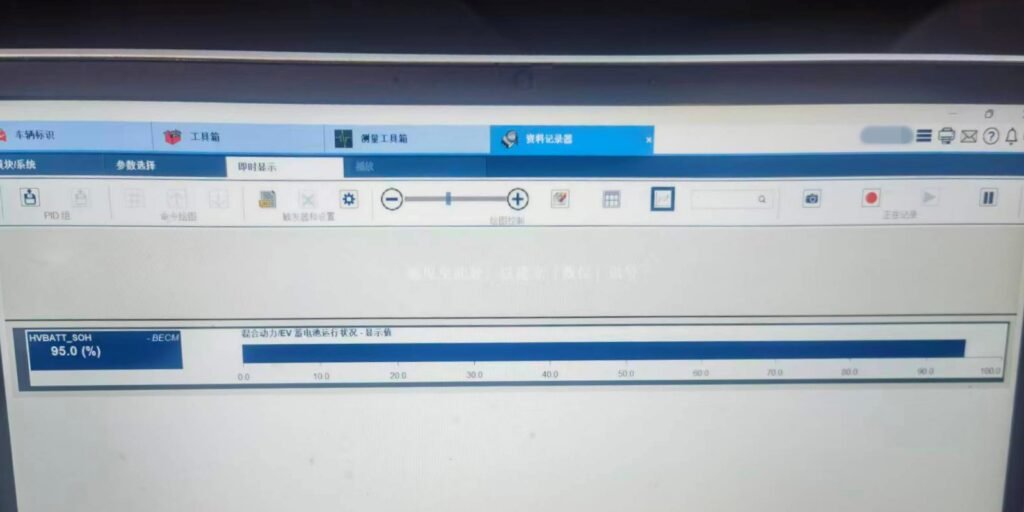
In summer, my full-charge range had read close to 540 km. In winter, it drops to about 450 km, with the coldest temperatures hovering around 0°C.
Based on real-world range figures, the battery appears to have degraded by roughly 5–7% over three and a half years.
Frankly, that’s a solid result.

Is My Experience Typical?
To find out, I called the service center and asked about other cars of the same model and production year.
Their response was telling:
This wasn’t an outlier—it was the norm.
A Bit of Math: Cycles in Perspective
For context, my EV battery uses an NCM811 battery (high-nickel cobalt manganese chemistry), typically rated for 800–1,000 full cycles.
Let’s do a rough calculation:
This isn’t perfectly precise—but it puts things into perspective. Even after years of use, the battery has only consumed a fraction of its theoretical cycle life.
What This Tells Us About EV Batteries
There is a useful rule of thumb often seen in both vehicle-grade and energy storage batteries:
When you compare this theoretical curve with real-world EV data—including my own car—the numbers line up surprisingly well. A battery SoH of around 95% after three to four years is exactly what you would expect from a healthy, well-managed pack.
Small consumer electronics often deviate from this curve—and that’s where many misconceptions come from. Tiny batteries, limited thermal control, and basic BMS designs mean phones, robots, and gadgets age far less gracefully than vehicle-grade packs.
EV batteries are far tougher than most people think.
Final Thought
So the next time you hear someone panic about battery degradation, remember this:
Warranties sell confidence, horror stories spread fear—but real-world data tells a far more balanced story.
One important caveat remains—and I feel this every winter myself: cold weather. When temperatures drop, the battery isn’t suddenly getting old or unhealthy. Physics simply gets in the way. Thermal management and cabin heating consume extra energy, and the electrolyte thickens, slowing ion movement inside the cell.
The result is obvious on the dashboard: less range. It’s frustrating, yes—but it’s temporary. This is the one real compromise we live with today, at least until technology continues to improve.
From where I stand, batteries may not last longer than you—but they’ll probably last longer than you expect.
 by
by