What Is a Semi-Solid State Battery?
Batteries are at the heart of modern life. They power our cars, store renewable energy, and keep our devices running all day. For now, most of these rely on lithium-ion technology, especially the familiar Nickel Manganese Cobalt (NMC) and Lithium Iron Phosphate (LFP) types. But battery technology is evolving quickly, and one of the most promising new contenders is the semi-solid state battery.
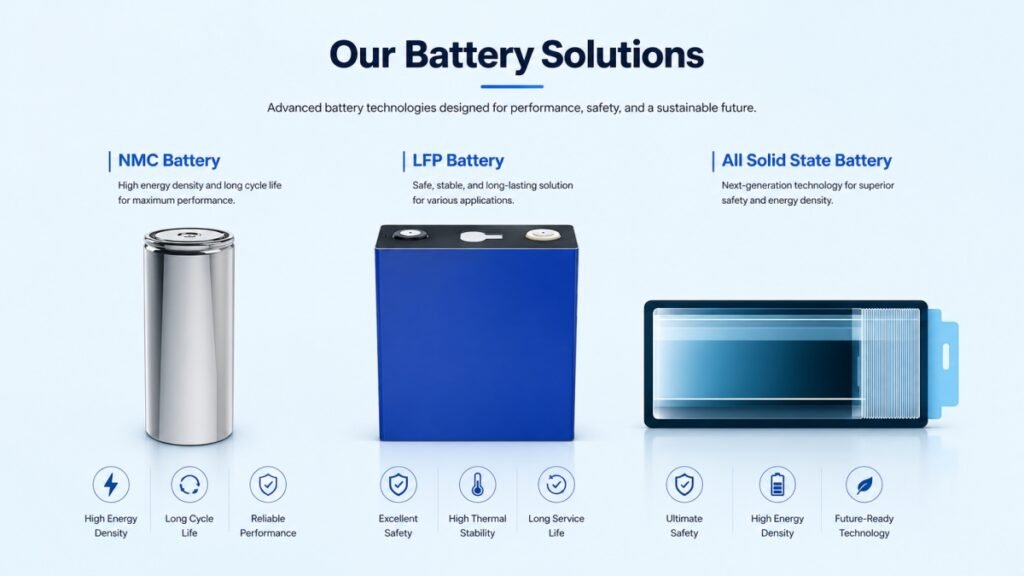
As the name suggests, a semi-solid battery sits somewhere between today’s liquid-based lithium-ion batteries and the fully solid-state batteries that researchers are still working to perfect. Instead of relying entirely on a liquid or solid electrolyte, it uses a gel-like or paste-like material that splits the difference, keeping most of the benefits of a solid design while sidestepping some of its toughest manufacturing hurdles.
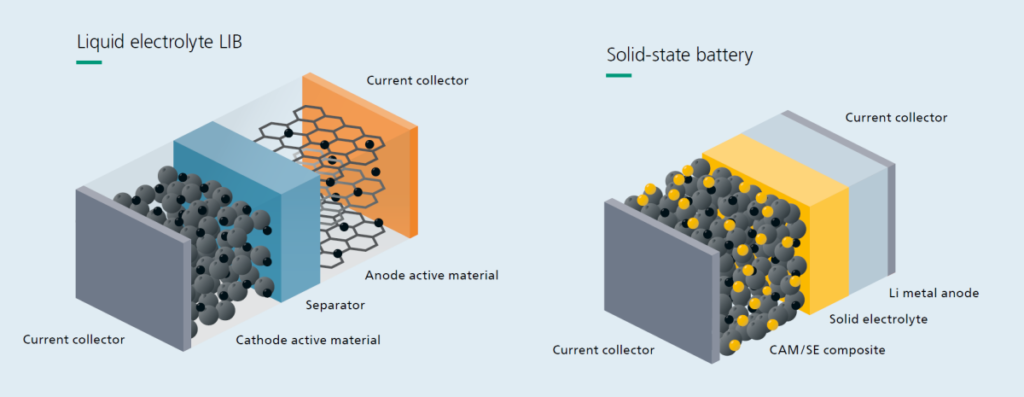
This hybrid design helps overcome many of the weaknesses of traditional batteries, while also avoiding the steep costs and technical challenges that come with building fully solid-state versions. It’s also why semi-solid batteries are no longer just a lab curiosity. As of 2026, they’re already rolling off production lines and into real vehicles, which makes this a good moment to understand what they actually are.
Why Semi-Solid Matters
Energy density. The biggest advantage of this new battery is how much energy it can pack into a given space. Compared to the LFP batteries commonly used in electric cars and energy storage, semi-solid versions can store significantly more power in the same footprint. That translates to longer driving ranges for EVs and slimmer, longer-lasting gadgets. Today’s commercial semi-solid cells generally land in the 300–360 Wh/kg range, well above conventional LFP, and several manufacturers are already pushing past 400 Wh/kg in newer prototypes.
Safety. Because the electrolyte is thick and gel-like rather than a free-flowing liquid, it’s far less prone to leaking and far less likely to catch fire. That makes semi-solid technology a reassuring option not just for cars, but for the phones, laptops, and wearables we carry close to our bodies every day.
Charging speed and temperature tolerance. Semi-solid batteries also tend to charge faster and handle extreme temperatures more gracefully. While conventional lithium-ion batteries lose conductivity and struggle in very cold conditions, semi-solid designs hold up noticeably better in the cold.
Cycle life. The one place semi-solid batteries currently fall a bit short is longevity. Top-tier LFP batteries can outlast them in raw charge-cycle count. But most semi-solid cells still comfortably exceed 1,500 cycles, and for many use cases, that trade-off is worth it for the jump in energy density and safety.
A Quick Comparison
Here’s how semi-solid state batteries stack up against today’s LFP batteries:
| Features | Semi-solid state battery | LFP battery |
| Energy density | Higher, ~360 Wh/kg up, more power in same size | Lower, 140–200 Wh/kg, limited by space |
| Thermal stability | Better heat resistance | Moderate |
| Safety | Superior (non-flammable, no leakage risk) | Good (potential leakage risk under stress) |
| Charging speed | Faster (higher voltage) | Slower (higher internal resistance) |
| Cycle life | Great >1,500 cycles | Superior >2,000 cycles |
| Cold temperature performance | Superior (lartely unaffected by cold) | Poor (conductivity drops in cold) |
| Cost | Lower as production scales | Lower as mature, large-scale manufacturing |
Real-World Momentum
This isn’t just a future promise — semi-solid batteries are already on the road. Chinese automaker NIO has been shipping a 150 kWh semi-solid battery pack, supplied by battery maker WeLion, in its ET7 sedan, with real-world range tests exceeding 1,000 kilometers on a single charge. On the more affordable end, a semi-solid-powered MG4 variant began reaching everyday buyers in China in late 2025, signaling that this technology isn’t reserved for flagship models alone.
Battery makers are racing to push the numbers further still. CATL has talked about a roadmap toward 500 Wh/kg semi-solid cells for late 2026 mass production, while FAW’s battery subsidiary has been testing a prototype pack at a similar energy density that’s reportedly cheaper to make than LFP, thanks to a manganese-based chemistry that avoids costlier nickel. None of this is guaranteed to play out exactly on schedule (battery roadmaps have a habit of slipping), but it shows real manufacturing momentum behind the technology, not just lab demos.
Where You’ll See Them
Semi-solid state batteries have the potential to make a big difference in several areas:
- Electric vehicles: Longer ranges, safer batteries, and faster charging could help ease common worries about EV ownership.
- Consumer electronics: Phones, laptops, and wearables that last longer on a charge and run safer in daily use.
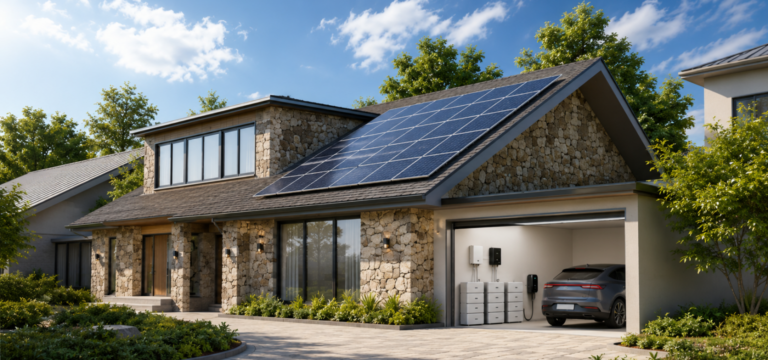
- Energy storage: More reliable performance makes them well suited for storing renewable energy from solar and wind, helping balance electricity grids.
A Step Toward the Future
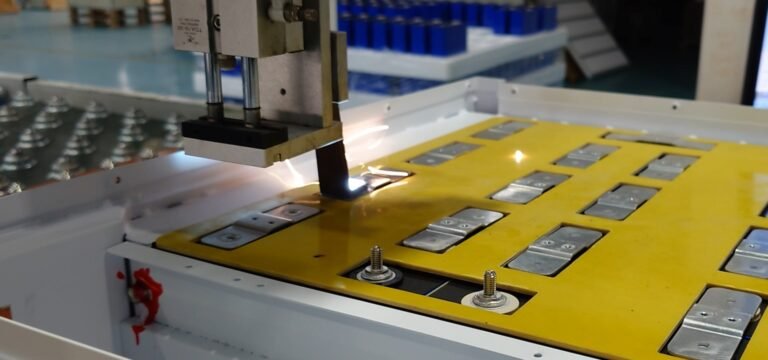
While fully solid-state batteries are still on the horizon, semi-solid technology offers a practical middle ground that’s arriving sooner and at a more manageable cost. Manufacturers can even adapt much of their existing lithium-ion production lines to build them, which makes scaling up considerably easier than starting from scratch.
In short, semi-solid state batteries represent an important bridge technology. They don’t just improve on what we have today — they pave the way for what comes next.
As production ramps up and prices come down, expect to see these batteries showing up in more cars, gadgets, and energy systems over the next few years. Semi-solid may not be the final destination, but it’s looking like the breakthrough that gets the industry there.