Dying EV Batteries Power a Circular Economy
China has unveiled the world’s first zero-carbon building that combines solar power, retired electric vehicle (EV) batteries, and cutting-edge digital technologies. This innovation not only...

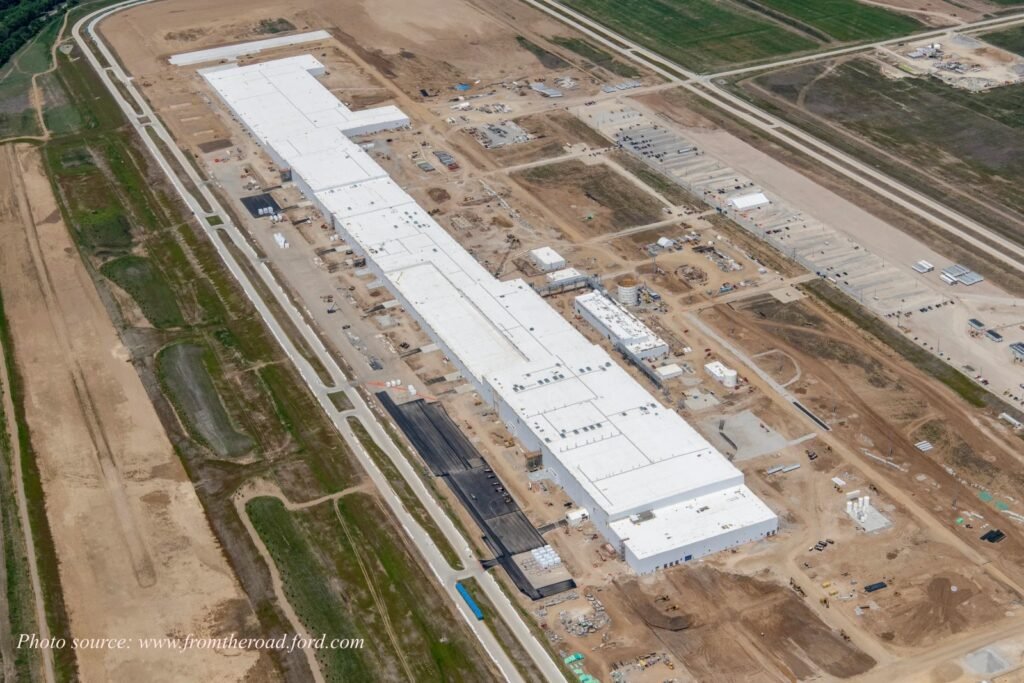
Ford is making a strategic move in the electric vehicle (EV) race by investing heavily in lithium iron phosphate (LFP) battery technology. According to Ford’s official press release, its new LFP battery cell production equipment is now operational, producing C-sample cells at its equipment supplier’s site before moving to full-scale production.
Lisa Drake, Ford’s Vice President of Technology Platform Programs and EV Systems, highlighted the significance of this milestone during a June tour of the BlueOval Battery Park Michigan:
“This is an opportunity for Ford to lead in this space and bring the technology back to the U.S.”
Building Toward Full-Scale Production
Ford’s LFP cells are expected to be integrated into its next-generation Universal EV Platform, announced in August. All vehicles built on this new platform will utilize prismatic LFP cells produced at BlueOval Battery Park Michigan.
The foundation for this shift dates back to 2022, when Ford announced a partnership with CATL, the world’s largest battery manufacturer. Through this collaboration, Ford is leveraging CATL’s expertise in manufacturing processes, battery chemistry, and product design while developing its own plant-specific designs for U.S. production. The first domestically produced LFP cells are anticipated in 2025.
Why LFP Is a Bold but Logical Move
Most U.S. EV makers rely on ternary lithium-ion batteries (nickel, cobalt, manganese), supplied largely by South Korean and Japanese manufacturers concentrated along America’s “battery belt.” Ford’s pivot to LFP technology sets it apart.
While LFP batteries have a lower energy density compared to ternary batteries, they come with two critical advantages:
By integrating LFP technology, Ford aims to stabilize its battery supply chain and accelerate the rollout of more affordable EVs in the U.S. market.
The Bigger Picture
Ford’s bet on LFP is more than just a technology shift—it represents a broader strategy to make electric vehicles accessible to mainstream consumers, while reducing dependency on overseas supply chains. If successful, this move could reshape the competitive landscape of the U.S. EV market, where cost and reliability are becoming decisive factors.
 by
by