NCM vs LFP Batteries: What’s the Difference and Which One Is Right for You?
When it comes to electric vehicles (EVs) and energy storage systems (ESS), you’ll often come across two terms: NCM and LFP. These refer to two...

Energy storage systems (ESS) are transforming how we manage electricity, enabling a smarter and more efficient way to harness renewable energy. In this blog, we’ll explore the basics of how energy storage systems work, their core components, and where they can be used to enhance energy stability and reliability.
1. How Does an Energy Storage System Work?
At its core, an energy storage system is like your mobile phone’s battery—its main function is to store power for later use. These systems primarily store electricity generated when there’s excess power in the grid, often from renewable energy sources such as solar, wind, and hydro power. The energy stored is used when demand exceeds the grid’s generation capacity or when renewable energy production is low.
Charging the System: During periods of surplus electricity, the ESS absorbs excess energy. This could be from a solar farm or wind turbines that produce more electricity than is needed at a given time.
Discharging the System: When energy demand spikes or renewable energy production decreases, the ESS releases the stored power to the grid or to specific users, providing a steady and reliable energy supply.
2. Core Components of an Energy Storage System
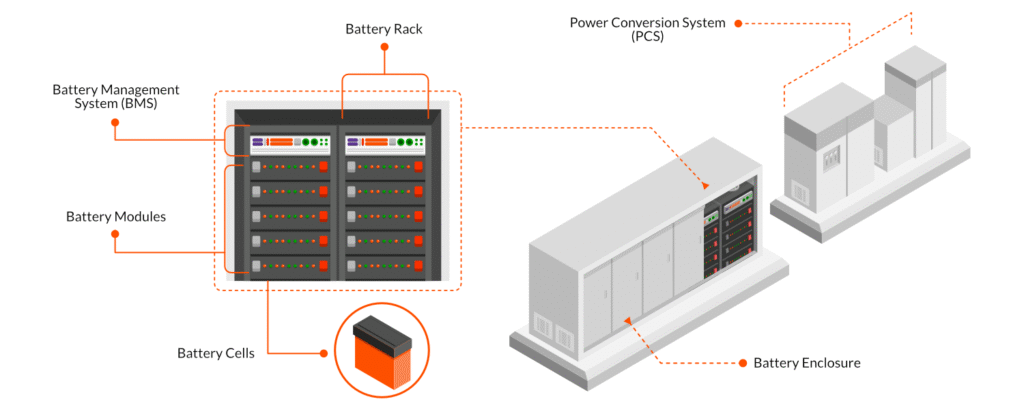
The effectiveness of an energy storage system depends on its key components. Here’s a breakdown of these essential parts:
Battery Set: This is the heart of the system, responsible for storing and releasing energy. Batteries come in various forms, but lithium-ion batteries are the most commonly used in residential and commercial ESS due to their high energy density and long lifespan.
Power Conversion System (PCS): Also known as a hybrid inverter in residential systems, the PCS converts DC (direct current) from the battery to AC (alternating current), which is what most homes and businesses use. It also plays a crucial role in regulating the flow of electricity between the battery, the grid, and other electrical devices.
Energy Management System (EMS): The EMS monitors the state of charge (SoC) of the battery, controls the charge and discharge cycles, and ensures that the system operates optimally. It also facilitates smart interaction with third-party systems, such as grid operators or other smart energy management technologies, to exchange important data for improved performance.
3. Application Scenarios of Energy Storage Systems
Energy storage systems have a wide range of applications that enhance energy management across different sectors:
Peak-Shaving and Load Shifting: ESS helps balance the grid by storing energy when demand is low and releasing it during peak hours. This helps avoid grid overload and ensures that consumers get a steady power supply, even during high-demand periods.
Balancing Renewable Energy: Renewable energy sources like solar and wind are intermittent, meaning they don’t always generate power consistently. Energy storage can smooth out these fluctuations by storing energy when production is high and releasing it when renewable sources are not generating enough power.
Backup Power: ESS can be used as a backup power source in case of grid failures, providing homes or businesses with reliable power during outages. This is particularly useful in regions prone to frequent power interruptions.
Stabilizing the Power Grid and Adjusting Voltage: Energy storage systems help stabilize the power grid by quickly injecting or absorbing power, thus preventing voltage fluctuations and ensuring the grid operates smoothly.
Conclusion
Energy storage systems are a crucial piece of the puzzle in creating a sustainable, reliable, and resilient energy infrastructure. By efficiently storing excess energy and discharging it when needed, ESS can help balance renewable energy generation, reduce peak demands, and provide backup power. With advancements in technology and growing applications, energy storage systems are set to play an even larger role in the future of energy.
 by
by