Ford’s Bold Bet on LFP Batteries
Ford is making a strategic move in the electric vehicle (EV) race by investing heavily in lithium iron phosphate (LFP) battery technology. According to Ford’s...

China has unveiled the world’s first zero-carbon building that combines solar power, retired electric vehicle (EV) batteries, and cutting-edge digital technologies. This innovation not only reduces carbon emissions but also demonstrates how EV batteries can gain a second life in the circular economy.
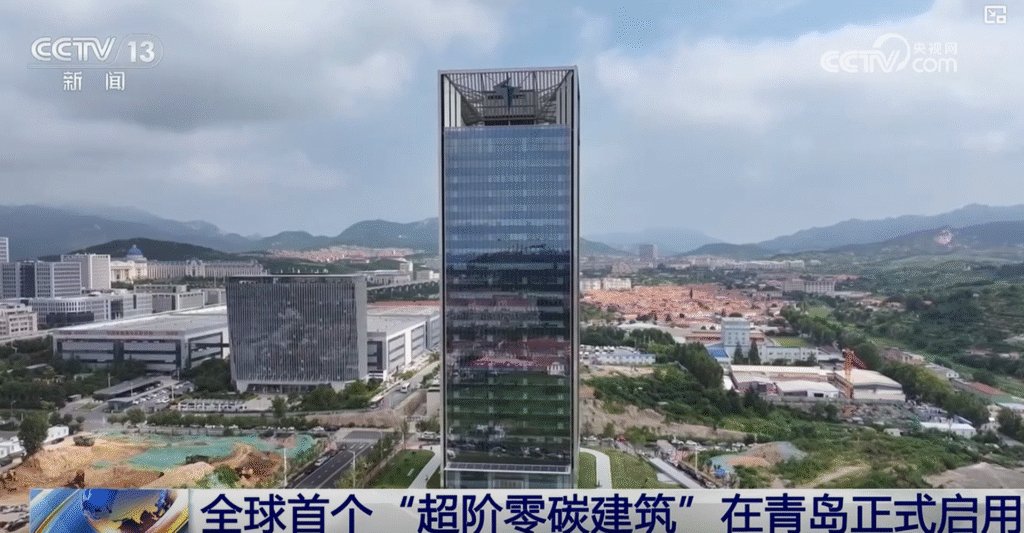
1. Zero-Carbon Building with Solar Integration
Unlike conventional buildings where solar panels are placed mainly on rooftops, this project uses building-integrated photovoltaics (BIPV) in the form of glass panels installed on the east, west, and south facades. The solar panels together can provide 25% of the building’s total energy demand, offsetting around 500 tons of carbon emissions annually.
2. Energy Storage with Retired EV Batteries
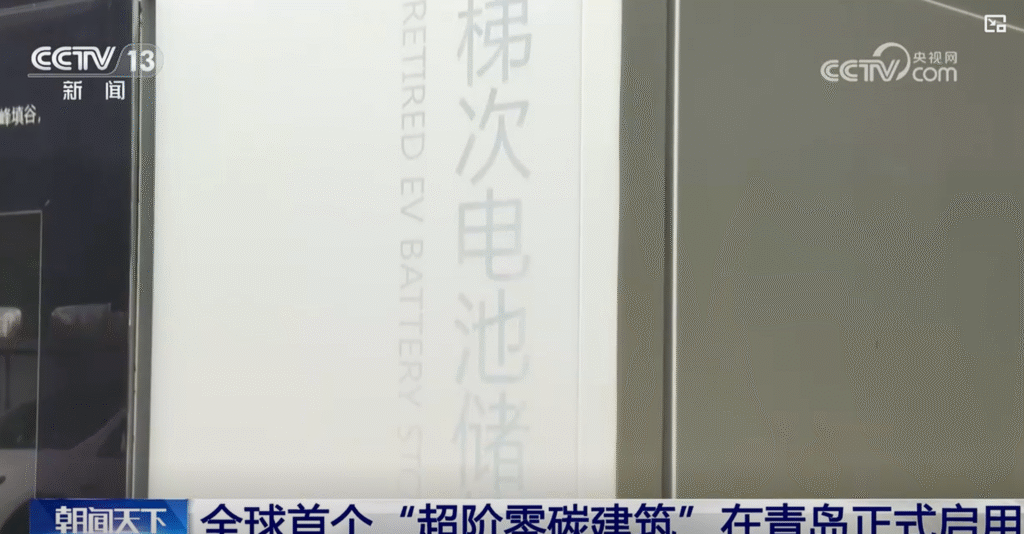
At the heart of the system are 14 repurposed EV batteries. Typically, EV batteries are retired once their state of charge (SoC) drops below 80%. While no longer suitable for vehicles, they still retain most of their capacity—making them ideal for stationary energy storage.
Excess power generated from BIPV is then, stored in these second-life batteries and later discharged to meet building demand, including charging EVs in the parking facility.
To ensure safety, the system is equipped with continuous monitoring during charging and discharging cycles. In case of thermal runaway, each battery pack is designed to disengage automatically and drop into a large water tank below, preventing fire hazards.
3. Digital Technology for Smarter Efficiency
The building’s energy performance is further enhanced by a digital management system. Equipped with advanced sensors, the system connects lighting, air-conditioning, elevators, and other facilities into one intelligent network. Devices automatically switch on when people are present and off when they leave, ensuring maximum efficiency with minimal waste.
4. Vehicle-to-Grid (V2G) Innovation
Going beyond self-sufficiency, the building includes a robot-assisted vehicle-to-grid (V2G) system. Designated parking spaces allow EVs to be connected automatically, enabling parked vehicles to supply power back to the building during peak demand. This two-way energy flow not only stabilizes the grid but also empowers EV owners to become active participants in the energy ecosystem.
Toward a Circular Energy Future
This pioneering project demonstrates how dying EV batteries can breathe new life into sustainable infrastructure. By integrating BIPV, second-life batteries, digital intelligence, and V2G, China’s zero-carbon building points the way toward a future where clean energy and circular economy principles reshape urban living.
 by
by